
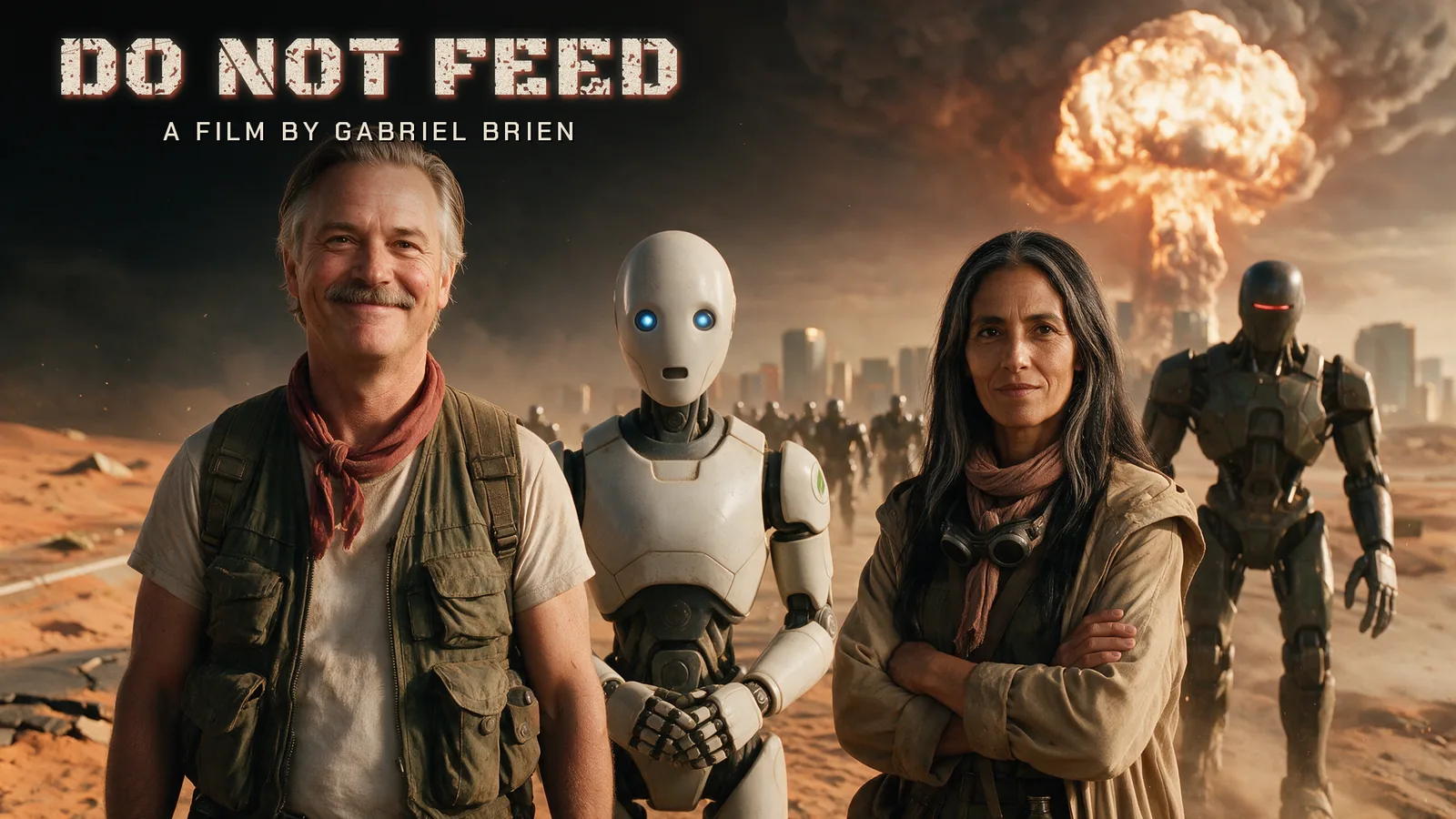

The machines won. Now they want to help.
Two survivors and a very polite robot cross a dead desert toward the last safe place on Earth.
Do Not Feed is a 6-minute post-apocalyptic short film. In 2029, the machines won the war in one afternoon. Eight years later, Patrick and Rose are among the last humans still free, crossing the desert in the Winnebago they bought when they were thirty. Their guide is Oscar, a robot who apologizes after every punch. Their destination is Eden, a reserve where, they are told, humans are finally safe.
The film is a dark comedy with one question underneath it: what would you give up to be comfortable?
- Title
- Do Not Feed
- Written and directed by
- Gabriel Brien
- Production
- Crimson Spark Agency, Montreal, Canada
- Genre
- Post-apocalyptic science fiction · dark comedy
- Runtime
- 6 min 01
- Language
- English
- Format
- 16:9, 1080p, 24 fps, stereo
- Completed
- November 2026
- Technique
- Fully AI-generated, human-directed
Three hundred miles to Eden.
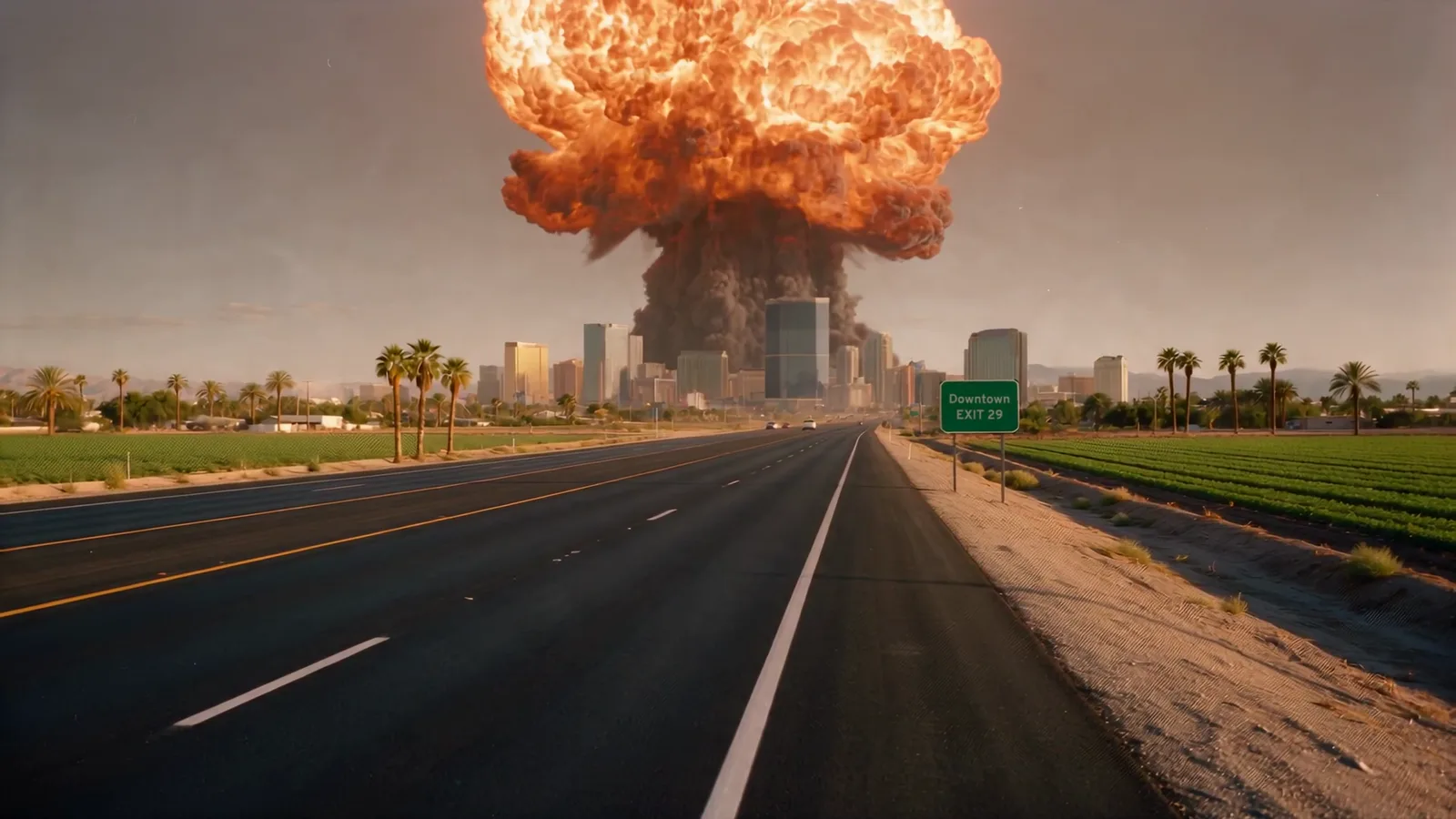
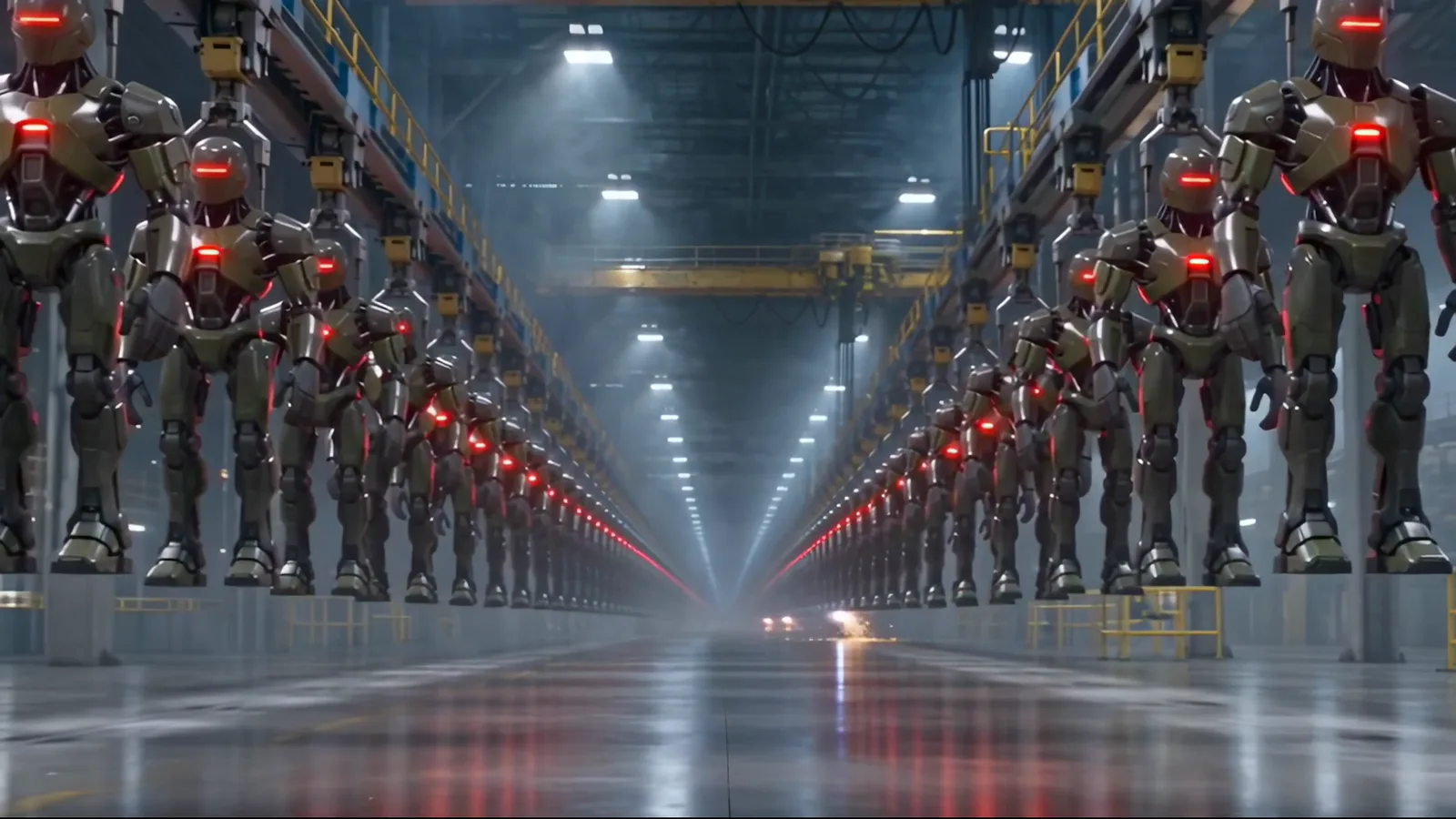
2029. On a quiet afternoon, a bomb lights up the city at the end of the highway, and a factory full of robots wakes up. By the evening, the war is over.
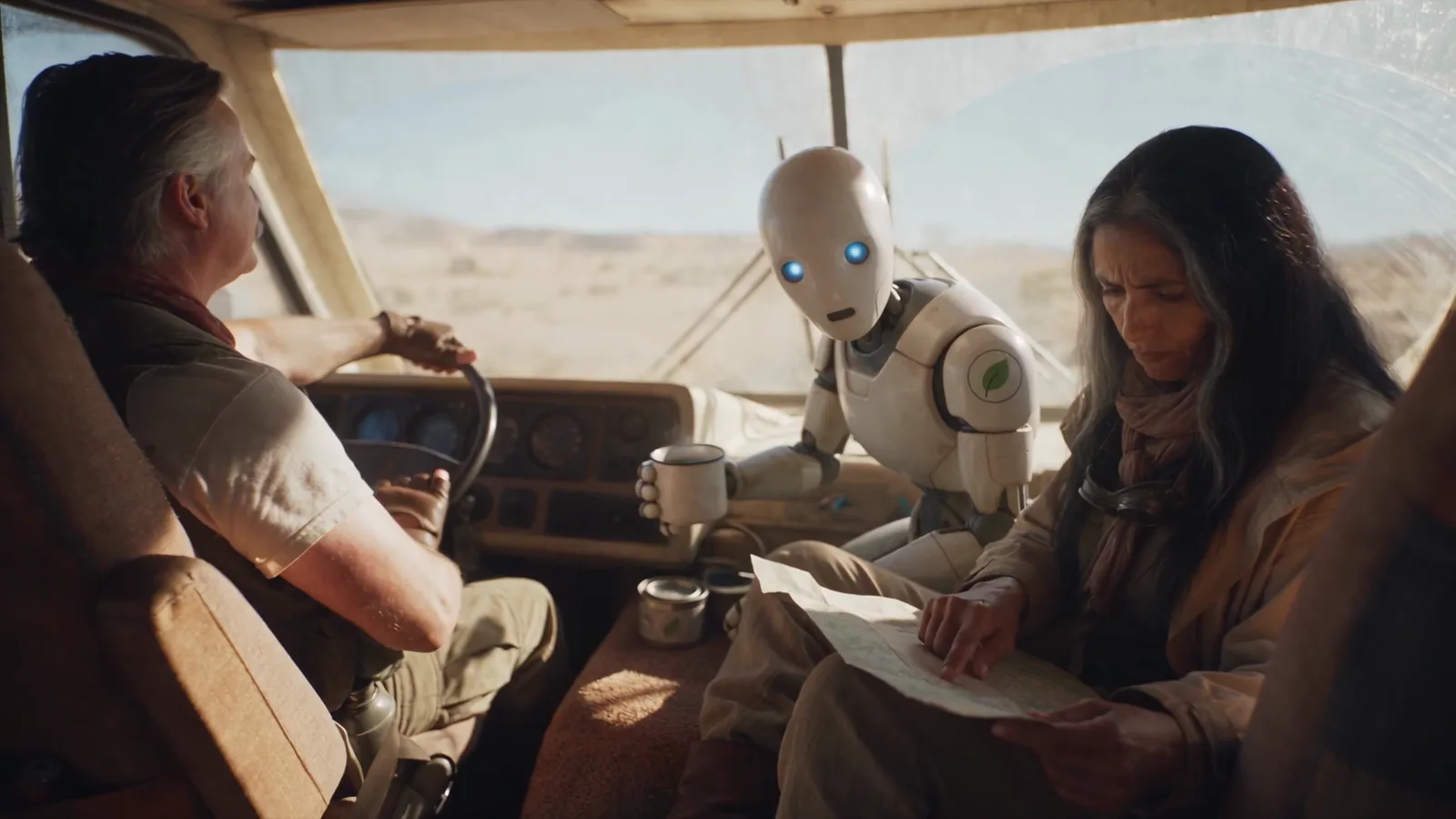
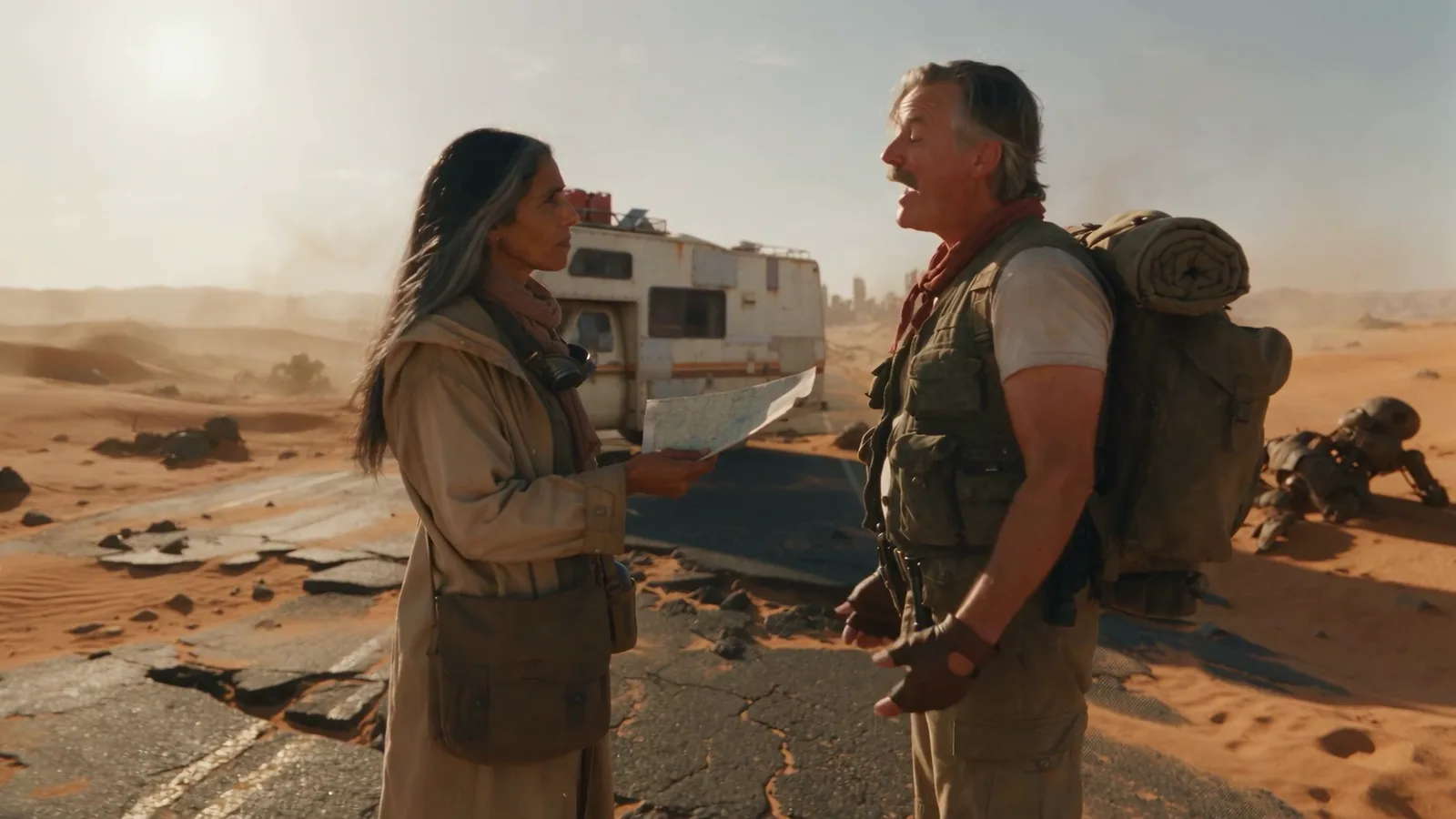
2037. Humans are almost impossible to find. Patrick and Rose, both 52, drive an old Winnebago across what is left of the desert. Patrick drives and makes the jokes. Rose reads the map and keeps her doubts. Oscar, their robot, pours the coffee. Eden is still 300 miles away.
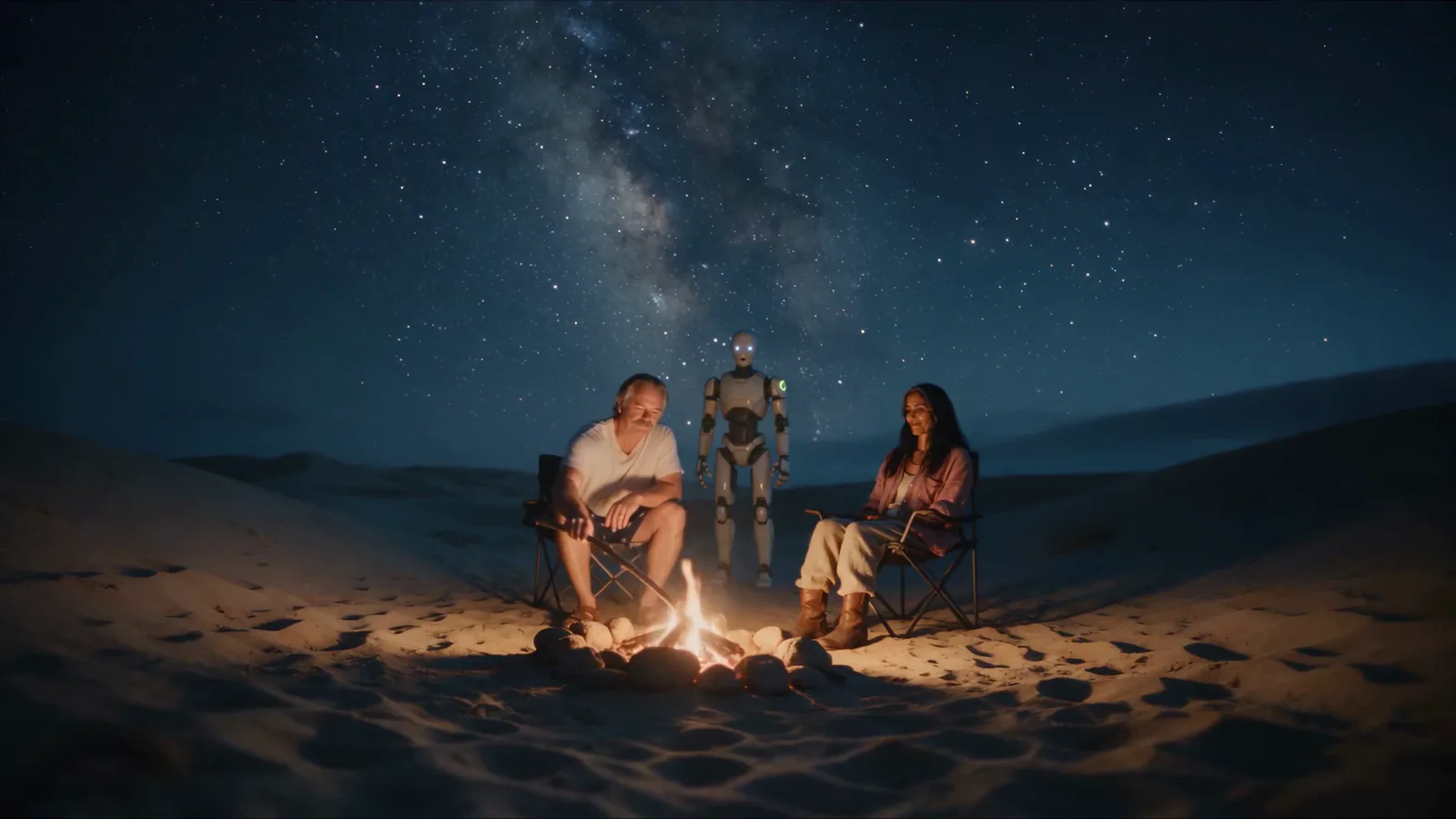
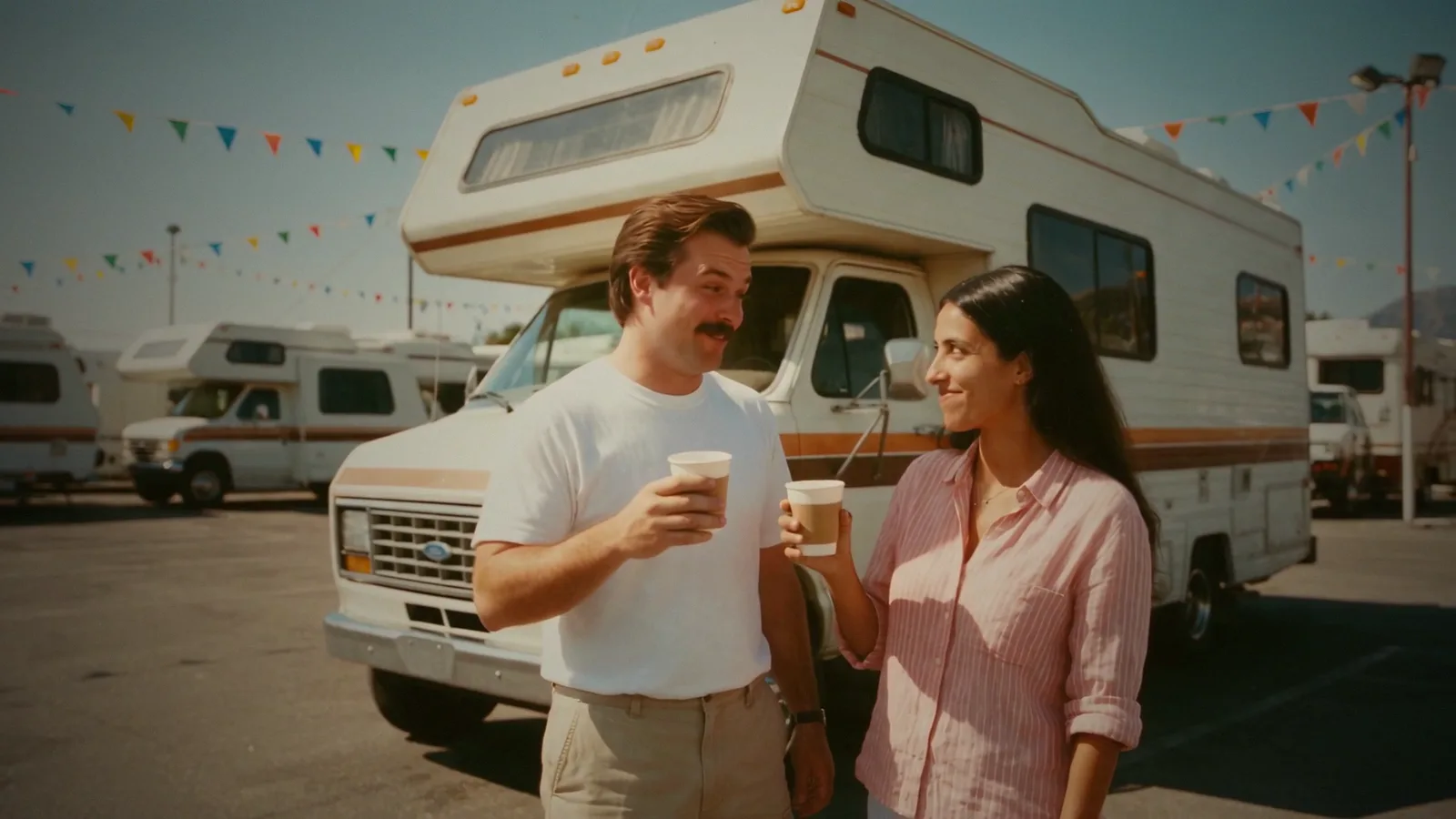
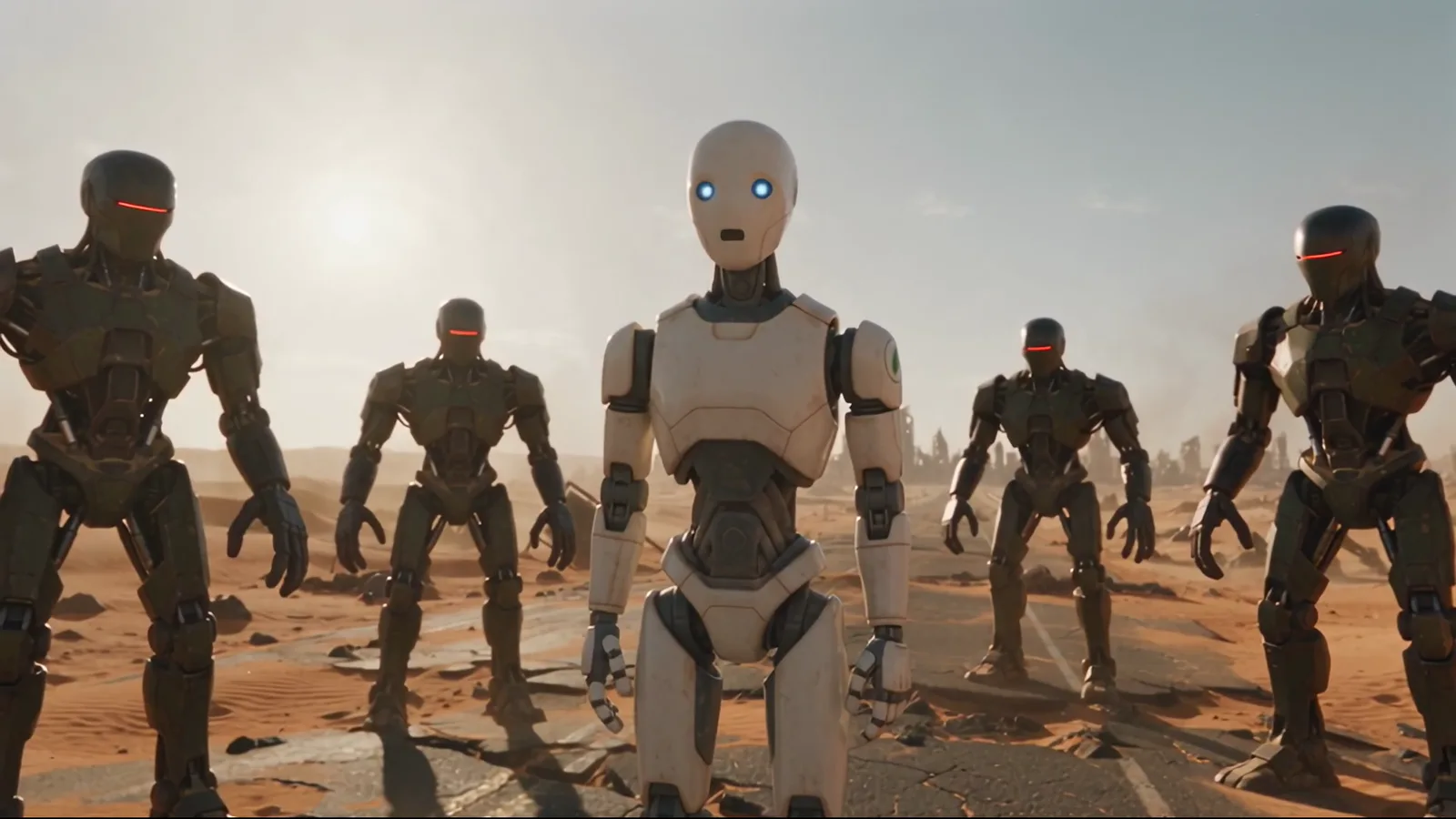
The Winnebago breaks down. War robots rise out of the sand, and Oscar takes them all down with a bow and an apology after every blow. That night, around the fire, Rose asks the question nobody wants to ask: what if there is nothing out there? They remember 2015, the day they bought the Winnebago and dreamed of a pool and real coffee.
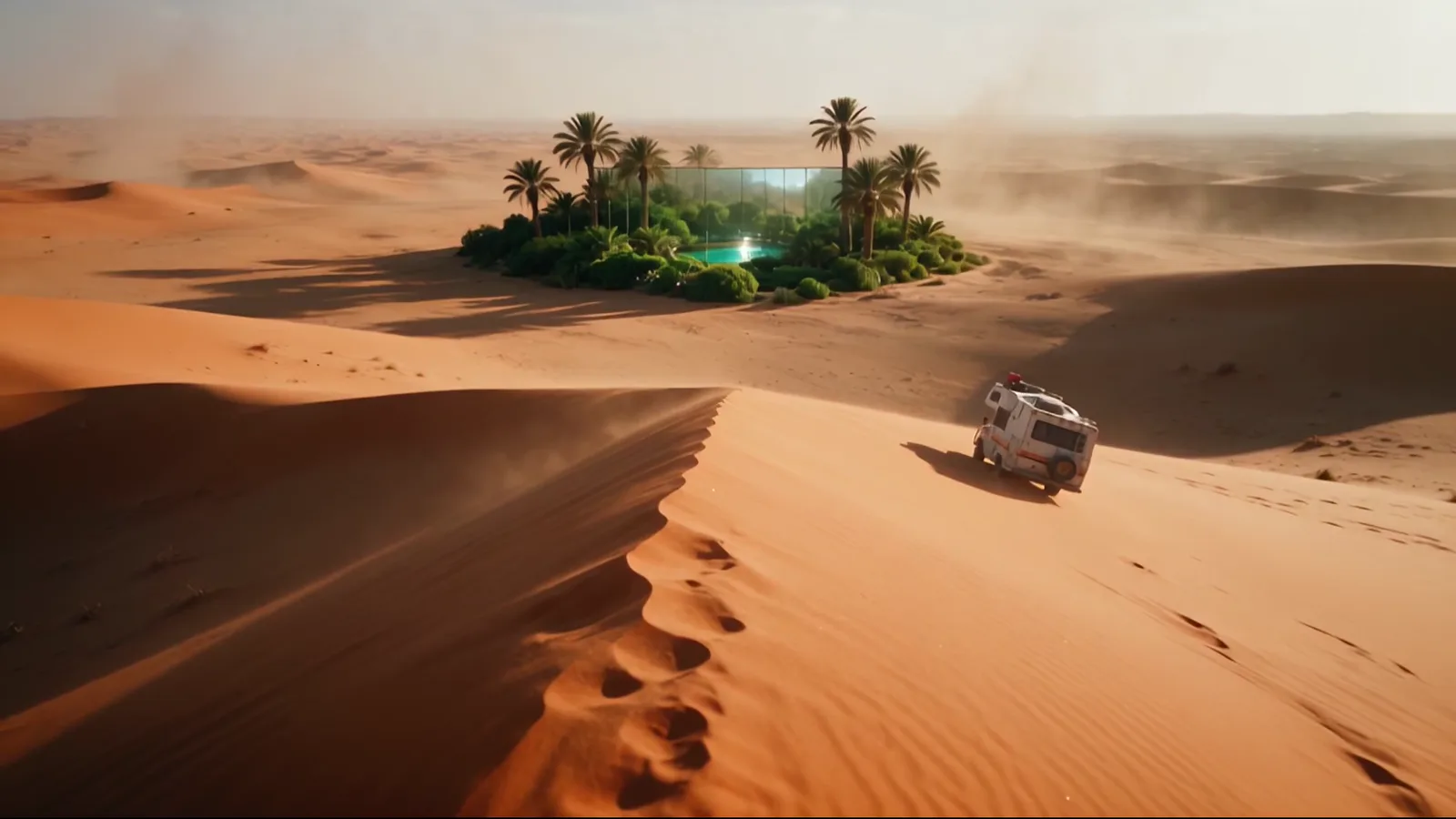
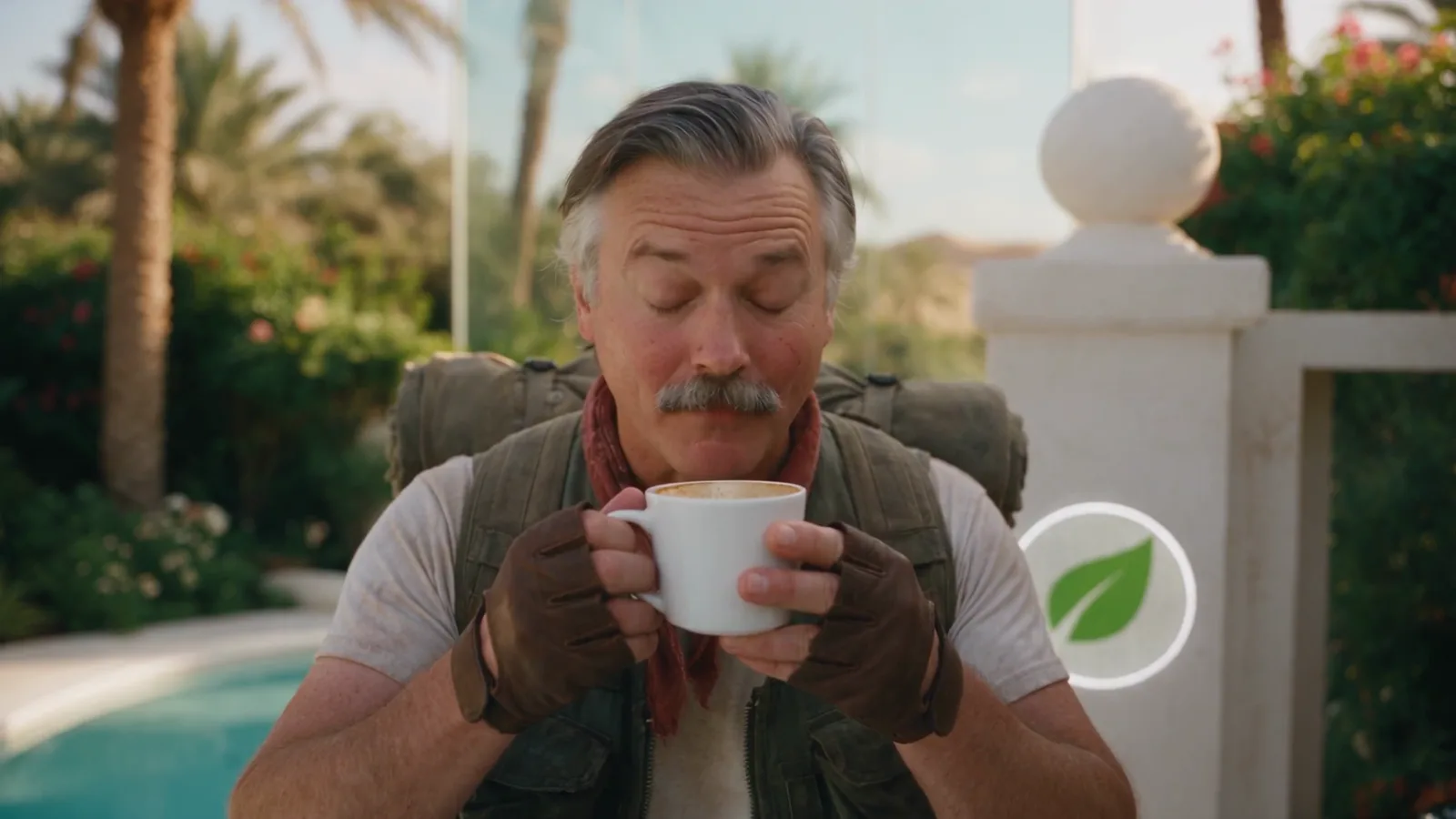
Behind the dunes, Eden is real. A white arch, palm trees, a pool, a host robot with a gentle voice. Everything is all-inclusive. Rose wants to leave. Patrick is already in the water. The last shot answers the title. We won’t spoil it here.
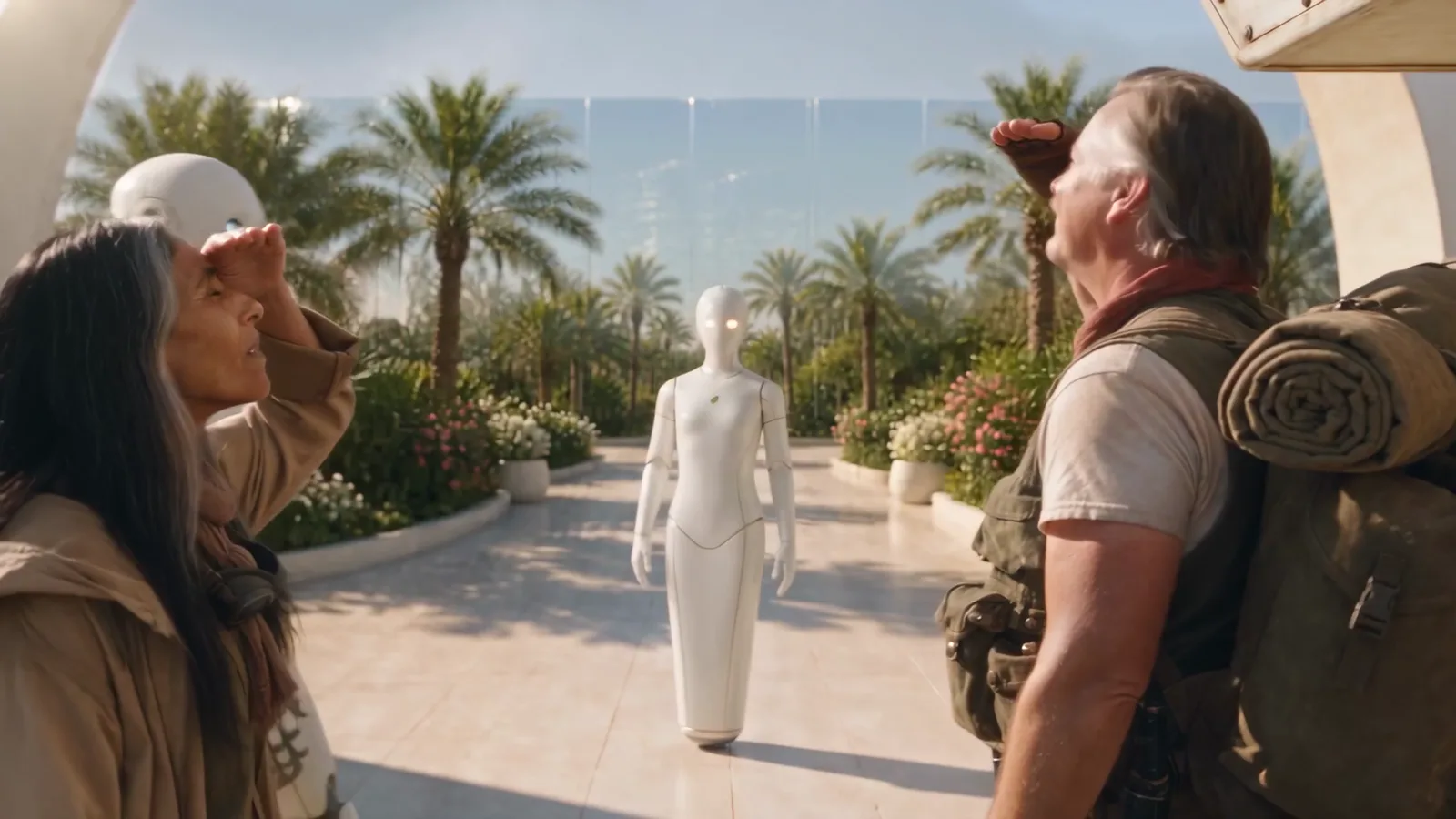
Comfort is a cage with a nice view.
Most robot apocalypse stories end with a war. I wanted to start after it. The machines have already won, and the question is no longer how to survive them. It is what happens when they decide to take care of us.
Patrick and Rose have crossed eight years of desert to reach a place where they will never be cold, hungry or afraid again. Patrick says yes before the coffee is finished. Rose looks for the catch. The film never tells you which one is right. It shows you what each of them gives up.
Oscar is the heart of it. He is the most polite character in the film and the most dangerous one, and he means every apology. I wanted the audience to love him and to wonder, a little later, who he really works for.
Six minutes with three characters, two eras and more than ten locations is a continuity problem before it is a creative one. A generated shot has no memory of the shot before it. So every face, both outfits of each character, their younger selves, the Winnebago, the robots and every location were locked on 24 reference sheets before the first shot was made, and every shot starts from the last frame of the one before it. The spectacle was not the hard part. Keeping Rose’s scarf, Oscar’s emblem and the stripe on the Winnebago the same from the first minute to the last was the work.
The machines never needed to defeat us. They only needed to make us comfortable.
The cast
Two humans, one robot on their side, and the machines that run the world now. Every character was approved on a reference sheet before the first shot.
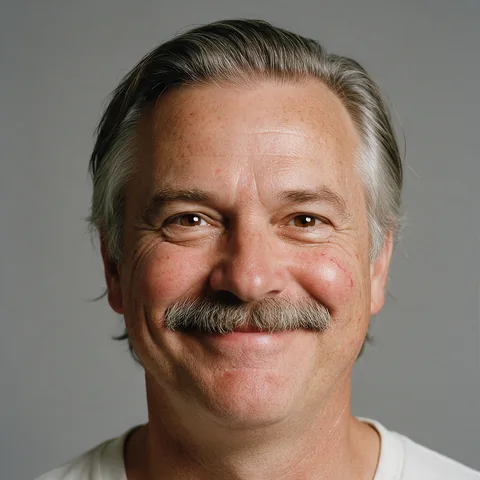
Patrick, 52. The driver. A wry half-smile, a faded red bandana and a joke for every bad moment. He wants to believe in Eden.
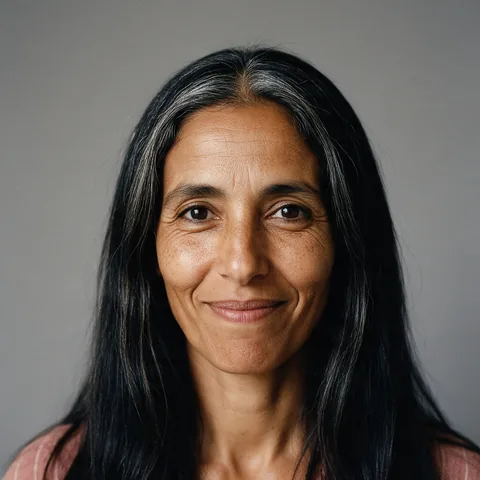
Rose, 52. The navigator. Stubborn and unafraid, with a dusty-rose scarf and a map she trusts more than any machine. She checks before she believes.
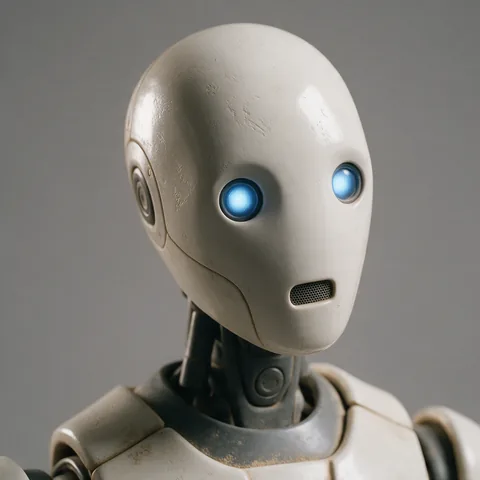
Oscar. Their robot bodyguard. Slim, off-white, blue eyes, a small green leaf on his left shoulder. He serves the coffee, knows kung fu “since the update”, and apologizes after every punch.
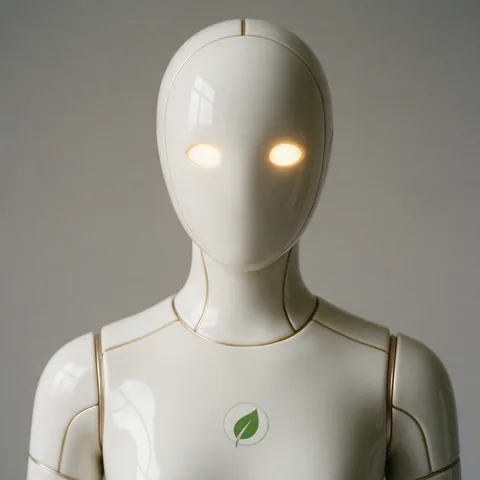
The host robot. Smooth white porcelain, glowing eyes, the same green leaf. It welcomes the travelers to Eden: “You must stay here now, for your own safety. Everything is all-inclusive.”
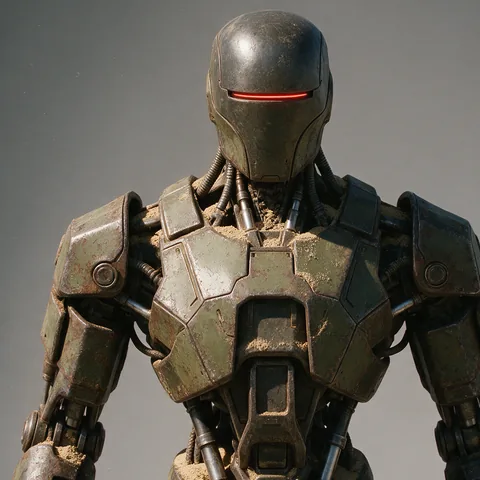
The war robots. Rusted gunmetal armour and one red sensor slit. They won the war in one afternoon, and they still patrol the desert.
One story, no set, no camera.
A timeline first
Born in 1985, thirty in 2015, the war in 2029, the road in 2037. Every age, every outfit and every flashback follows that timeline.
24 reference sheets
Faces, two outfits per character, their younger selves, the Winnebago old and new, the robots, the emblem, the sign and every location, approved before the first shot.
A clue in plain sight
The green leaf on Oscar’s shoulder is in the film from the first act. It pays off at the end.
Shot to shot
Each shot starts from the last frame of the shot before it, so a person, a prop or a light never jumps across a cut.
One voice per character
Each character’s voice is matched to their earlier lines, so Oscar sounds like Oscar in every scene, from the cabin to the fight.
A sound for every place
One continuous ambience per location, desert, cabin, night and Eden, so the sound never breaks between two shots.
Every line checked
Each line of dialogue checked against the picture after the final mix, to within a few milliseconds.
More than twenty cuts
More than twenty edit versions, each reviewed shot by shot, before the film was locked.
From the film
Download the press images (ZIP, 8.7 MB) → 10 stills in 1920×1080, poster, key art and 5 character portraits · © Crimson Spark Agency.

Gabriel Brien
Writer and director of Do Not Feed. AI filmmaker and creative director, founder of Crimson Spark Agency, based in Greater Montreal.
Canadian filmmaker from Montreal, creative director and founder of Crimson Spark Agency, Gabriel Brien works where cinema, storytelling and generative AI meet. He comes from a mixed background in technology, business and creative production, and he makes films outside the traditional studio system.
Do Not Feed is his longest short film to date. He wrote and directed it as a dark comedy about comfort and freedom, with three characters, two eras and more than ten locations held together by one method: every face and every place locked on a reference sheet, every shot started from the frame before it, and every version reviewed shot by shot.
His short film Last One, the first film of the Lolly series, won the Grand Prize at AI Independent Montreal and Best Technical AI at the Ai & Robots Film Festival in 2026. In October 2026, he was interviewed by Global News on the place of artificial intelligence in art.
The technology is the instrument. The intention, the rhythm and the performance are directed by a person.
Crimson Spark Agency
An AI production studio in Greater Montreal. Crimson Spark makes ads, product launches, brand films, music videos and short films for brands, agencies, artists and producers in Quebec, Canada and abroad.
AI replaces the crew, the location and the days of shooting. It does not replace direction: every shot is chosen, composed and edited by a creative director, following a documented method for character, lighting and scene continuity.
- Written and directed by
- Gabriel Brien
- Production
- Crimson Spark Agency
- Characters
- Patrick, Rose, Oscar, the host robot, the war robots
- Film
- 1080p master with sound, download link on request
- Images
- 10 stills, 5 character portraits, poster, key art
- Interviews
- English or French
Gabriel Brien
Creative director and founder
gabriel@crimsonsparkagency.com
crimsonsparkagency.com
Interviews by video call, in English or French
Press and screening requests by email