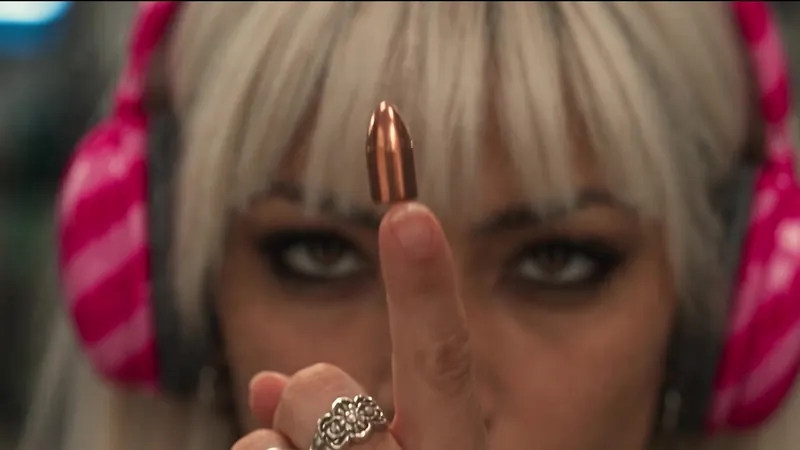
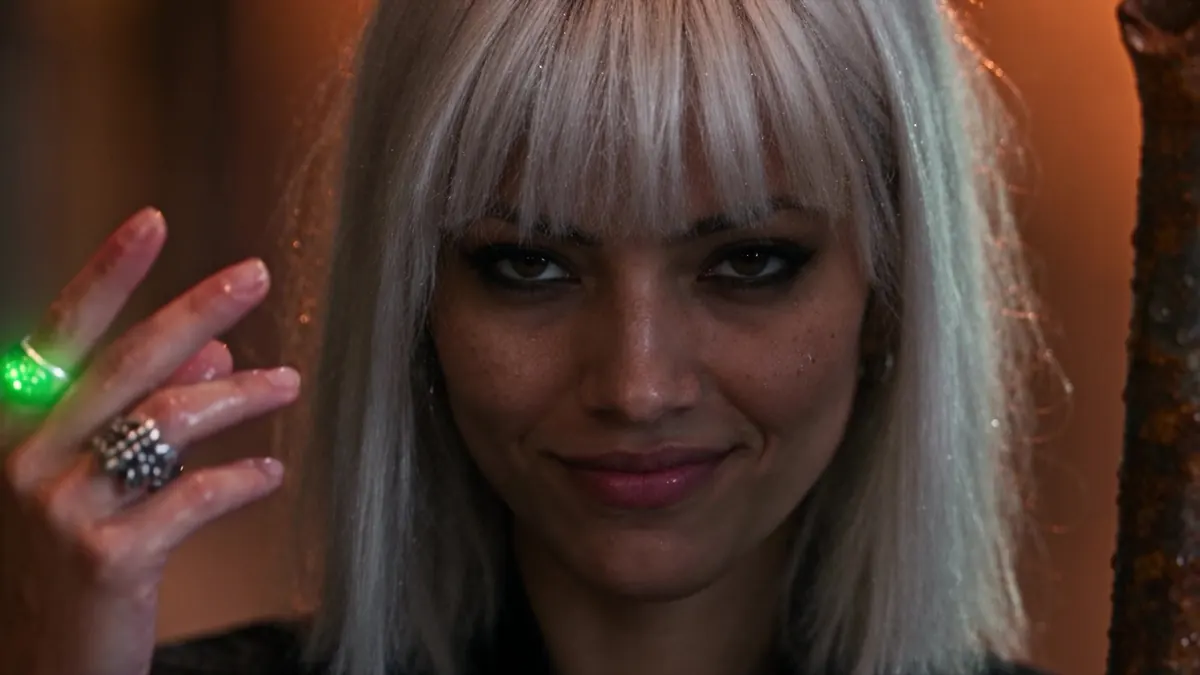
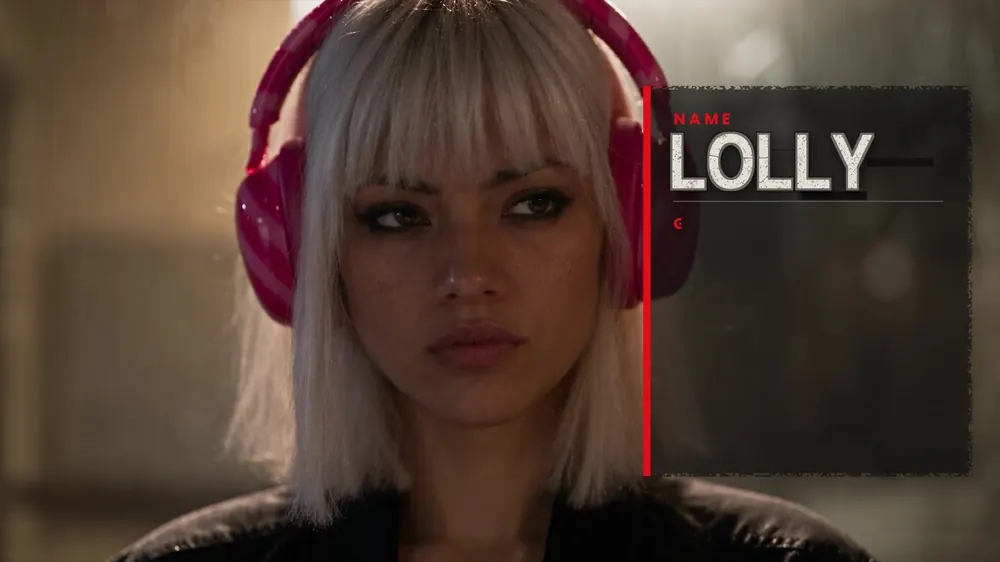
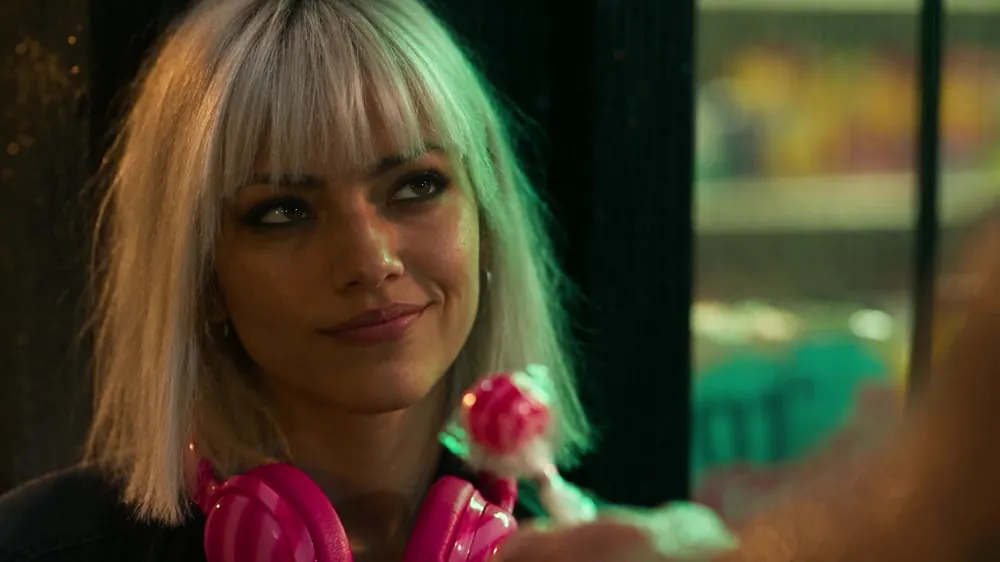
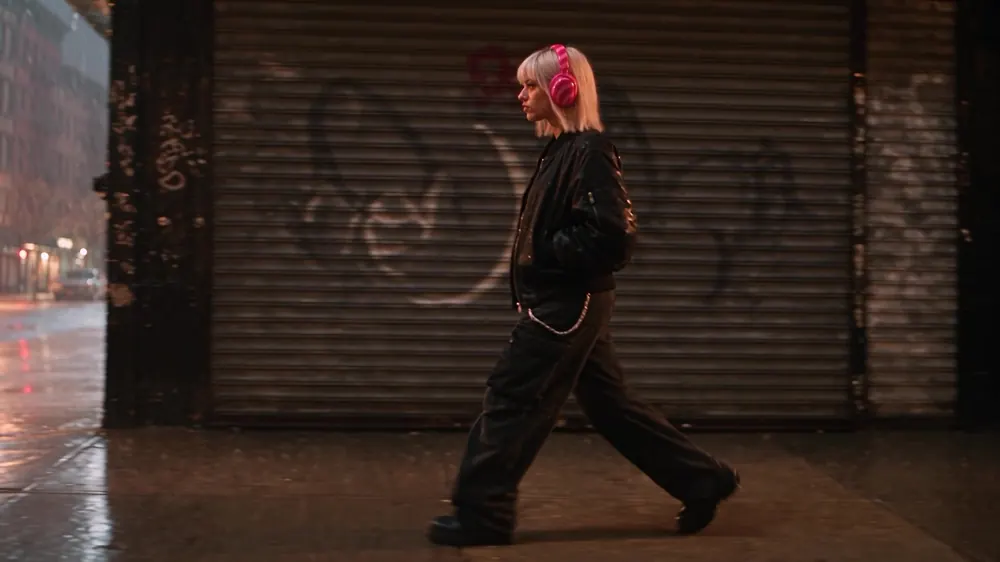
Last One is a short film we wrote, directed and produced at Crimson Spark. It runs 2 minutes 51 seconds and follows Lolly, a young woman in pink headphones who can stop time with a snap of her fingers, through one rainy night. It is the first film in our Lolly series.
The film is now online: watch it below. This article covers what it is about, how it was made, and what the method means for anyone commissioning a film where the same character has to hold from the first frame to the last.
The film
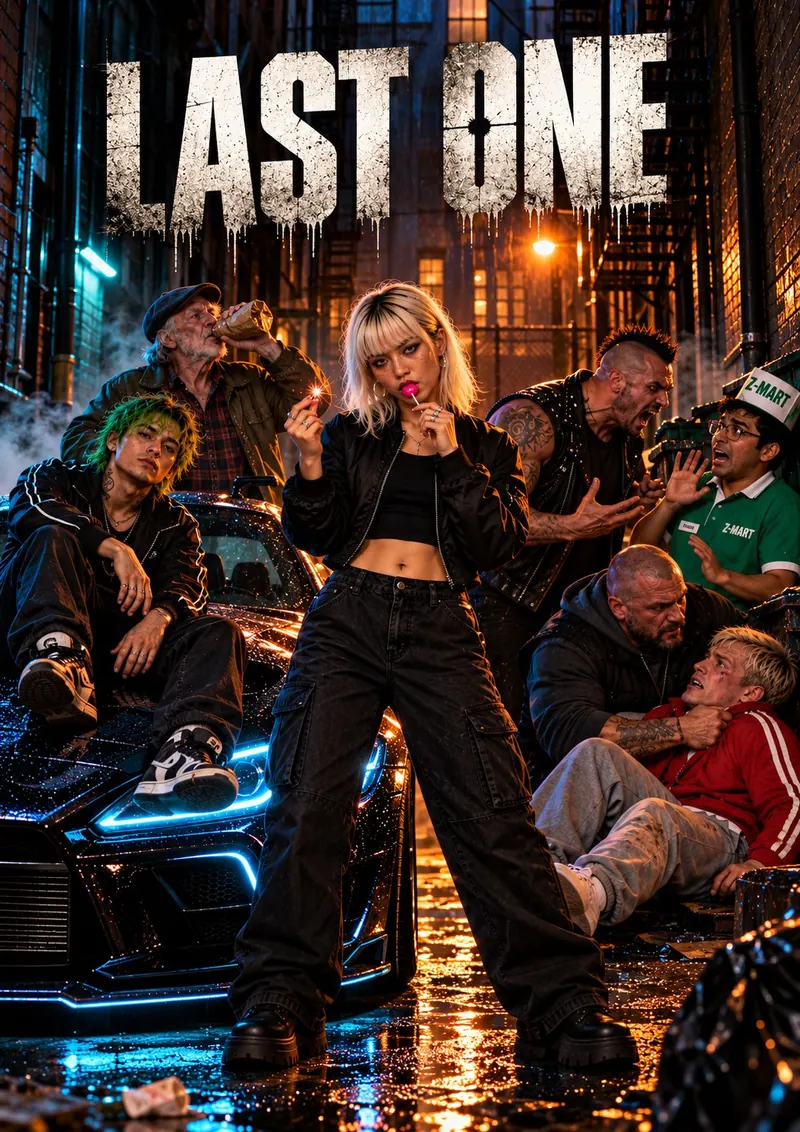
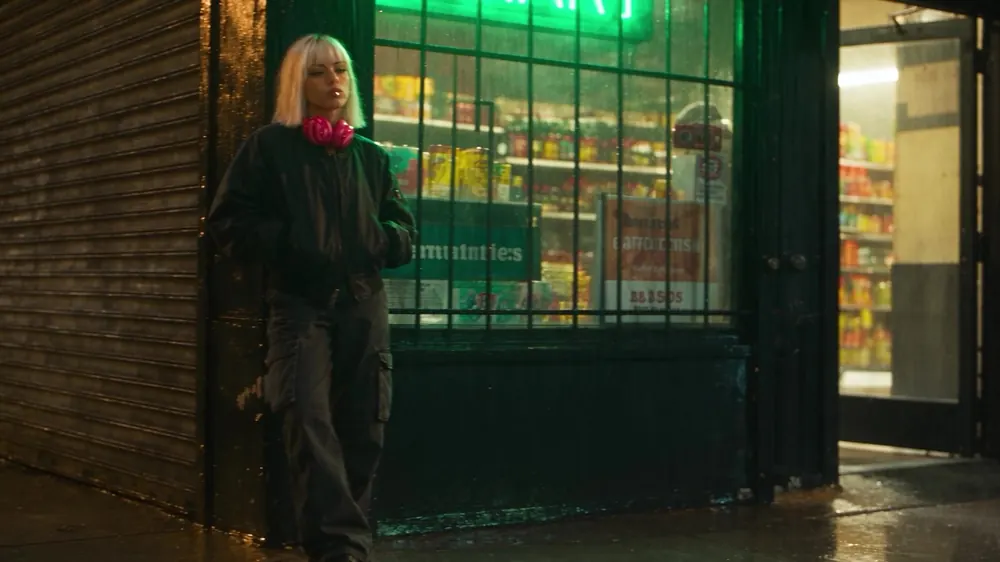
Out of candy on a rainy night, Lolly walks to the corner store and ends up saving everyone she meets, including the guy who laughed at her.
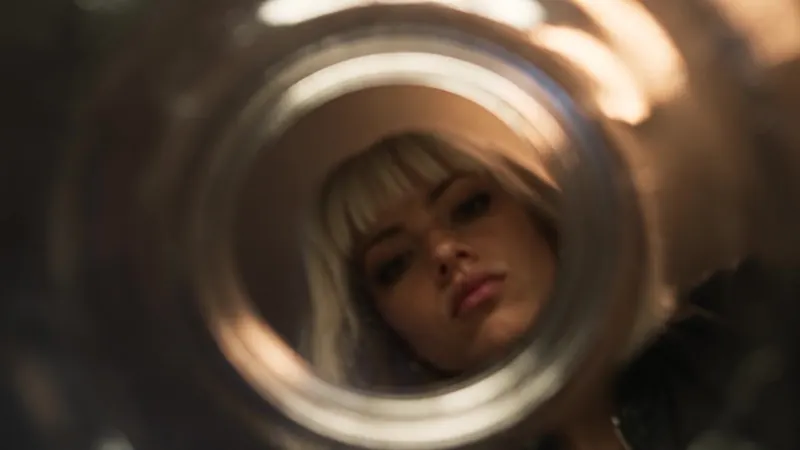
It opens in a run-down studio apartment. Lolly sits on her kitchen counter and stares into an empty candy jar. She grabs her keys and her headphones and heads out. On the steps of her building, her neighbour Kyle and his friend mock her: who is she going to save from death tonight, Miss Lollipop? She smiles and says nothing.
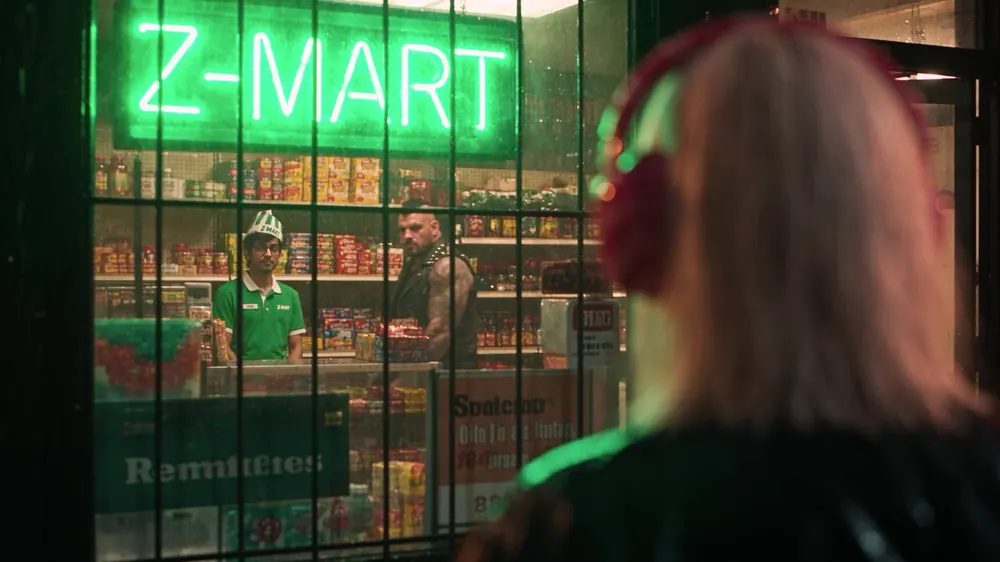
At the corner store, a robber is holding a gun on the night clerk. He fires, and the bullet stops in mid-air. From there the night keeps handing her strangers who need a second chance: the clerk, a drunk old man who never looks both ways, and finally the neighbour who laughed at her, now in trouble in an alley on her way home. We will leave the ending for the screen.
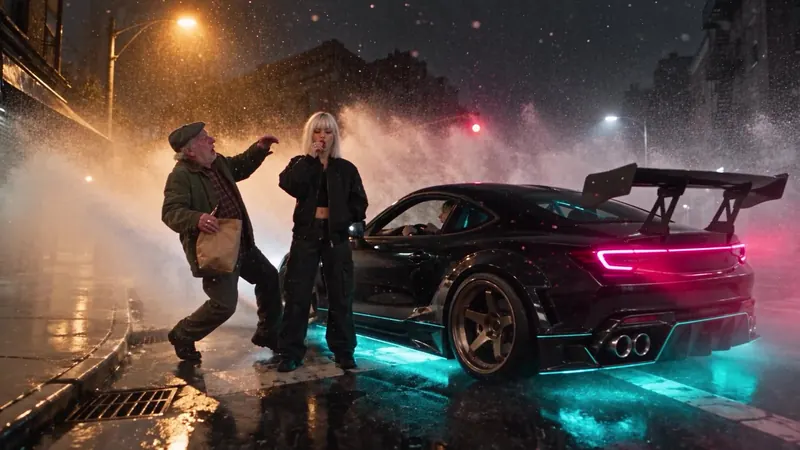
Dark fantasy and action, in English with English and French subtitles, made in Quebec in 2026.
Who deserves to be saved?
From the director's statement:
Last One began with a simple idea: what happens when someone who appears powerless is actually the most powerful person in the room?
I wanted to explore the small acts of cruelty we encounter every day: the humiliation, intimidation, and indifference that often happen in plain sight while everyone else simply keeps walking.
At the center of the film is Lolly. She doesn't lecture people or explain herself. She watches. And when she decides to intervene, she does so almost effortlessly. That contrast between innocence and power became the heart of the character.
One choice shapes the whole film: all night long, the snap that stops time stays off screen. We only see what happens after it. At the very end we see it for the first time, and the film cuts on that exact frame. By then the audience knows her well enough to finish the scene themselves.
One person, no set, no camera
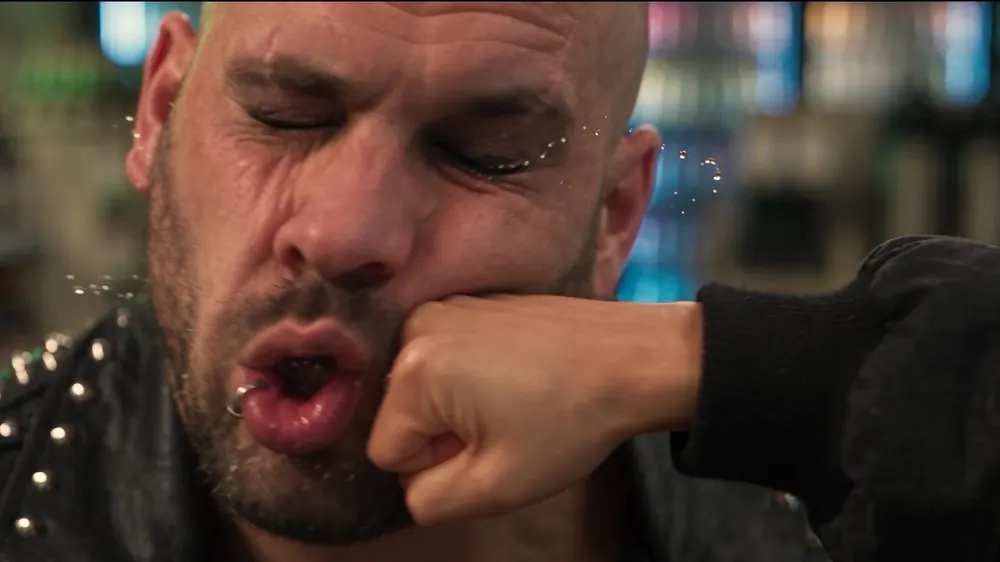
Every image in Last One is generated. The film was built as seven sequences of 15 or 30 seconds, each generated as a single continuous take from one written master prompt, then assembled, mixed, coloured and subtitled in a conventional edit.
Last One by the numbers
Production, September to October 2026
1
person, from script to final mix
7
sequences, one master prompt each
29
reference images approved
0
frames of filmed footage
Continuity has to be solved before the camera rolls, because there is no set to go back to.
On a real shoot, a missing prop or a changed jacket gets fixed with a reshoot. In generated film there is nothing to go back to: if the character drifts between two shots, the only fix is to generate again, and drift compounds. So the work that matters most happens before generation.
The method, step by step
1. Script and storyboard
The story was written first, then broken into sequences and drawn shot by shot, so every sequence had one centre beat and a known length before anything was generated.
2. Reference design
Every character, prop and location was fixed on a reference sheet against a neutral grey background: faces and wardrobe from three angles, props in their different states, locations from four camera positions. The written descriptions were then rewritten from the approved images, not from the original idea. That is why a jacket, a scar or a lollipop stays the same from the apartment to the alley.
3. Generation
Each sequence was written as one master prompt, in plain language, the way a cinematographer is briefed: one named camera angle per beat, the rhythm described in words, no timestamps. Cuts between places are hidden at the instant an object fully covers the lens.
4. Voices
Dialogue was generated with the picture so the lip sync holds, then converted so each character keeps one voice across the film. Lolly's inner thoughts were added in post.
5. Music, edit and mix
One generated score runs under the whole film. The edit, sound design, colour grade, titles and animated subtitles were done by hand.
From the film
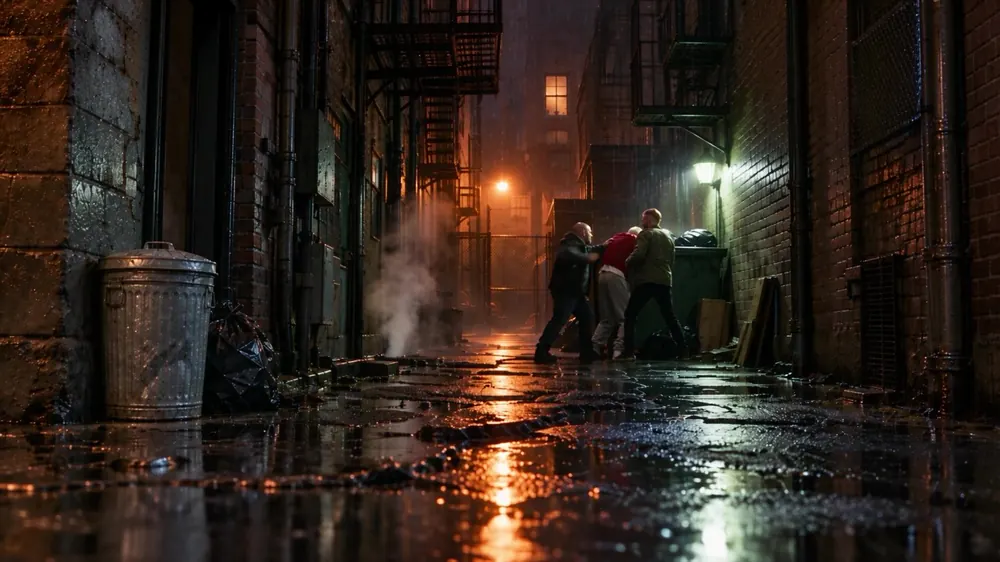
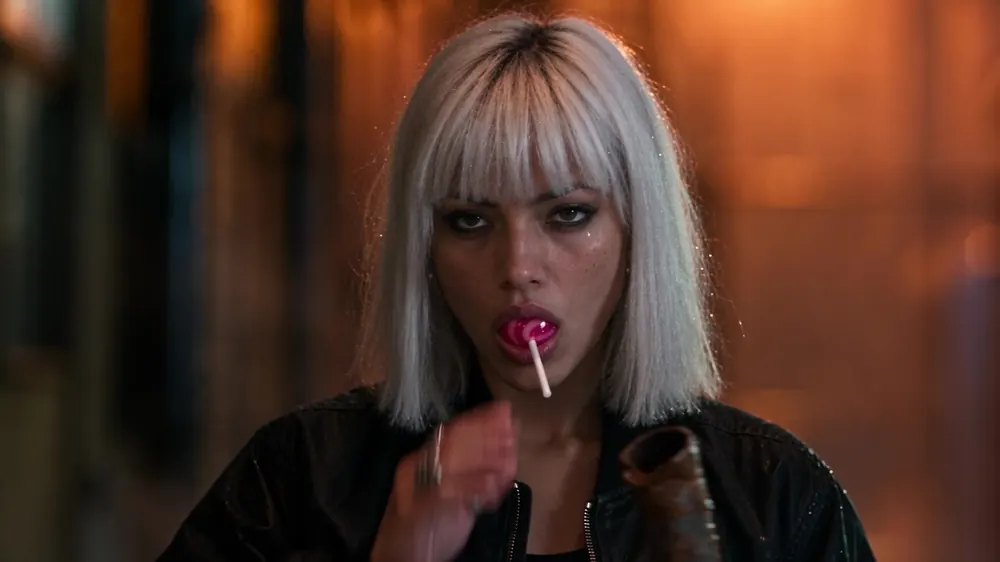
What the method means for brand work
A three minute story with six recurring characters is a stress test for the problem every brand film runs into with generative video: keeping the same face, the same product and the same place identical from one shot to the next. The answer in Last One is the same one we use on brand work. Lock the references first, rewrite the brief from what was approved, and treat each scene as one directed take instead of a pile of separate clips.
That discipline is what lets one character carry a whole night and still feel like the same person. For a brand, it is what lets a spokesperson, a product or a location stay recognizable across a campaign. We wrote more about the reference sheet itself in Character Sheet 101 and about holding a character across shots in Character Consistency in AI Video.
What AI changes for independent film
The film is also an exploration of a new kind of filmmaking. Every visual sequence was created using generative AI, but the intention behind those images was deeply human. The characters, story, framing, performances, rhythm, sound, and final edit were shaped around a specific directorial vision.
For me, AI does not replace the filmmaker. It removes certain physical limitations between an idea and the screen. Suddenly, a filmmaker can imagine a world, direct it, reshape it, and bring it to life without asking whether that world is financially possible first.
Last One is both a story about consequence and an experiment in what independent cinema can become when imagination is no longer constrained by the size of the production.
What is generated, and what is not
Every image, character, location and voice in Last One is AI-generated, and so is the score. The film contains no filmed footage, no stock footage and no stock music. No real person's face or voice is used, and every character is fictional. The edit, sound design, colour grade, titles and subtitles were done by hand. The film is produced and owned by Crimson Spark Agency.
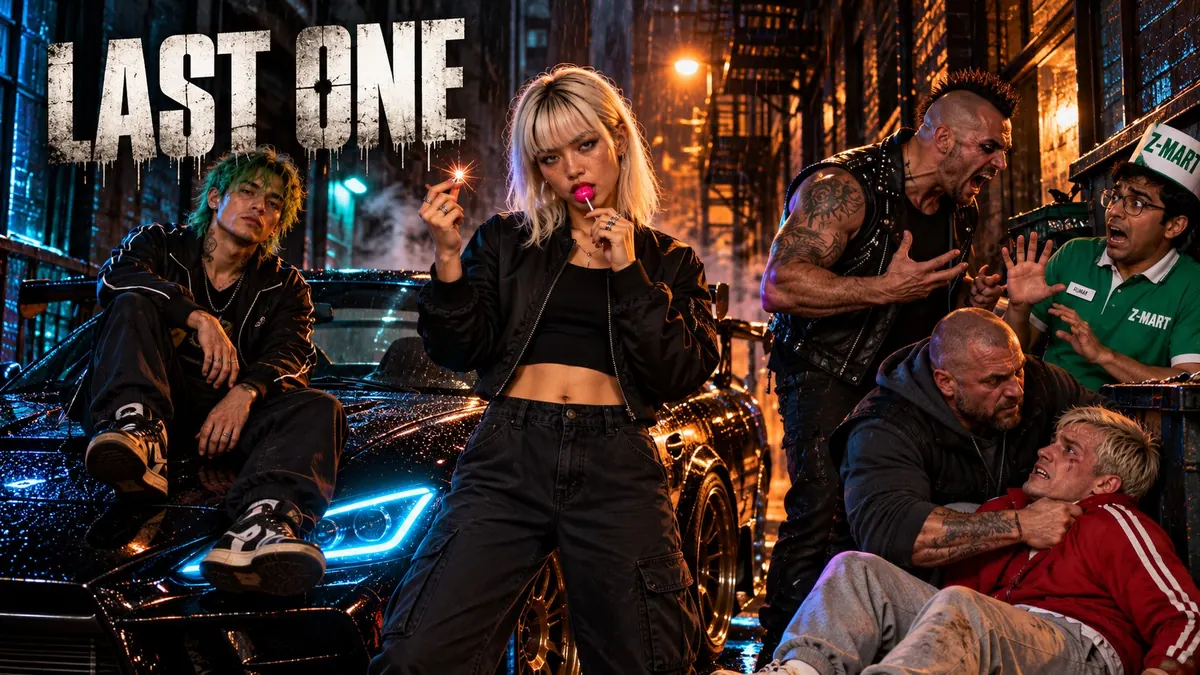
Where to see it
Last One is online on this site and in our portfolio, and it is entered in twelve festivals. Programmers, journalists and critics will find everything in the press kit, and can ask for a download link.
Press materials

Gabriel Brien
Founder of Crimson Spark Agency. AI filmmaker and creative technologist, writing from running this work daily.
More about Gabriel →