
A company records one training video in January. By April the process has changed, the presenter has left, and the video is wrong. Re-shooting means finding the person, the room and the budget again. This is the problem AI avatar video was built to solve.
It solves it for some uses and creates new problems for others. An AI avatar is a synthetic presenter that speaks a script to camera. Whether it earns trust or loses it depends on who the face belongs to, what the script says, and whether viewers are told. This guide covers the decisions a buyer has to make. For the question of credibility on screen, read our piece on why audiences accept or reject an AI spokesperson. This one covers the practical side.
Two kinds of AI avatar
Stock or generated presenters. The face belongs to nobody in particular. It was generated, or licensed from a library of synthetic presenters. Setup is fast, the look is generic, and the presenter has no link to your brand. It works for internal material where nobody expects a known face.
A digital twin of a real person. A real person, often a founder, an executive or an expert, is recorded. The recording becomes a model of their face and voice, which then speaks new scripts. A digital twin video carries that person’s identity, so the stakes are higher. The audience believes a specific human stands behind the words. That belief is why twins can build trust, and why they can damage it.
Two kinds of AI avatar
What changes when the face belongs to a real person
| STOCK PRESENTER | DIGITAL TWIN |
|---|---|
| Face: nobody in particular | Face: a real person |
| Consent: library licence | Consent: that person, in writing |
| Best use: internal material | Best use: updates, training, founder |
| Risk: generic, no brand link | Risk: misuse breaks trust |
Our studio’s own social videos use the founder’s consented digital twin. The founder recorded the source material, approved the result, and every script is reviewed before release.
Where an AI spokesperson holds up
The uses that work share a feature: the information matters more than the performance.
- Recurring updates. Pricing changes, policy changes, quarterly notes. The presenter stays, the script changes, and no one books a studio.
- French and English versions. The same spokesperson can deliver both languages, which matters in Québec and across Canada. Voice and lip sync need a native-speaker check. See our notes on dubbing between French and English.
- Training and onboarding. Procedures change, and updating a script is cheaper than re-shooting a room.
- Product explainers. A presenter walks through features while screen recordings and graphics carry the demonstration.
- Weekly social content from a founder. A twin lets a busy founder publish regularly, in their own words, without a recording day each week.
The face can be generated. The responsibility cannot.
Where it backfires
- Fake testimonials. A synthetic person praising a product as a customer misleads viewers. It also creates legal exposure, covered in our piece on AI testimonials and the line they cross.
- Pretending the avatar is live. A presenter who appears to answer a live question, greet a live audience or react in real time deceives viewers about what they are watching.
- Sensitive messages. Layoffs, safety incidents, apologies, condolences. These need a human face and a human voice. A twin signals distance exactly when people need presence.
- Unapproved likenesses. Using a person’s face or voice without their agreement ends their trust and can end your campaign.
What it takes to make AI avatar video that works
Consent in writing. Get a signed agreement from the person whose face and voice are used. State the uses, the duration, the languages, the platforms and what happens if they leave the company. Treat the twin like any other use of a person’s image.
A good recording of the real person. Likeness and voice quality depend on the source. Even lighting, a clean audio track, neutral and expressive takes, and a calm room produce a twin that holds up on a large screen. A poor recording produces a poor twin, whatever the software does afterwards.
Scripts written for speech. Written prose sounds stiff when spoken. Short sentences, one idea each, words the person would really say. Read the script aloud before it goes into production.
Editing around the avatar. A talking head that fills the frame for two minutes loses viewers. Cut to b-roll, screen recordings, graphics and on-screen text. The avatar becomes one element in a film, with an editor deciding where it appears.
The production chain
Five steps before an avatar video is published
- Written consent
- Source recording of the real person
- Script written for speech
- Edit with b-roll and graphics
- Disclosure on the platform and in the video
The uncanny valley risk
Viewers react when a face is nearly human but something is off: blink timing, a mouth that moves a little late, hands that never move. The reaction is a loss of attention and of trust. Short clips, close framing at a moderate scale, and cuts away from the face reduce the risk. Our article on the uncanny valley in film and AI avatars explains what to watch for in review.
The rules to check before publishing
This is a summary of sources we verified, not legal advice.
Quebec. The Civil Code of Québec gives every person a right to respect of their reputation and privacy (art. 35). Among the acts that may count as invasions of privacy, article 36 lists using someone’s name, image, likeness or voice for a purpose other than the legitimate information of the public. A commercial video with a person’s face and voice needs their consent.
United States. The FTC states that its fake-review rule has no general ban on AI-generated avatars in marketing. It does say that using a celebrity’s avatar to praise a product without permission would violate the rule if consumers would think the celebrity endorsed it. California’s AB 2602 makes some contract clauses unenforceable when they allow a performer’s digital replica to replace in-person work without a reasonably specific description of the uses, when the performer was not represented by a lawyer or a union. It applies to performances fixed on or after January 1, 2025. For more, read our article on California’s synthetic performer law.
Platforms. Since March 2024, YouTube asks creators to disclose realistic content made with altered or synthetic media, including a realistic person’s likeness or a generated voice. Meta requires its disclosure tool for organic posts with photorealistic video or realistic-sounding audio that was digitally created or altered. TikTok Ads Manager has a toggle for ads that are fully AI-generated or significantly modified by AI. Meta labels ads made with its own AI tools, and in 2026 extended detection to other tools through embedded industry metadata, according to Social Media Today.
FAQ
How much does an AI avatar video cost?
Cost depends on the type of avatar, the length and number of videos, how much script and editing work is involved, the number of languages and the recording needed for a digital twin. Producing around the avatar takes most of the effort. Our rates are on the Pricing page.
Is it legal to clone my own voice and face?
Generally yes, because you can consent to the use of your own image and voice. Keep a written record of that consent and how the twin will be used. In Québec, articles 35 and 36 of the Civil Code protect privacy and likeness. Clone someone else only with their written agreement.
Can viewers tell it’s an avatar?
Often, yes, especially on long clips, large screens and close-ups. Stiff gestures, mouth timing and flat emotion give it away. Short clips, scripts written for speech and cuts to b-roll reduce the effect. Assume some viewers will notice, and plan to tell them.
Do I need to disclose an AI avatar?
Platform rules often require it for realistic synthetic people. YouTube asks creators to disclose, Meta requires its tool for organic realistic video or audio, and TikTok has an AI-generated content toggle for ads. Disclose in the video or caption even where a platform does not require it.
How long does setup take?
It varies with the avatar type and the recording. A stock presenter can be ready quickly. A digital twin needs a recording session, review and approval, then script and edit time for each video. Plan for review rounds with the person whose face is used. Contact the studio for a schedule on your project.
Before you commission an AI avatar video
- Has the person whose face and voice are used signed an agreement that names the uses?
- Is each script written to be heard, and edited with b-roll and graphics?
- Will viewers be told, on the platform and in the video, that the presenter is synthetic?
Planning a project? See our services.
Sources
- Civil Code of Québec, articles 35 and 36 (Légis Québec, consulted October 28, 2026)
- How we’re helping creators disclose altered or synthetic content (YouTube Official Blog, March 18, 2024)
- Labeling AI-generated images on Facebook, Instagram and Threads (Meta, February 6, 2024)
- Meta updates AI labels on ads (Social Media Today, 2026)
- Add disclaimers to ads in TikTok Ads Manager (TikTok Ads Help, consulted October 28, 2026)
- Consumer Reviews and Testimonials Rule: Questions and Answers (U.S. Federal Trade Commission, consulted October 28, 2026)
- Single day: California enacts five bills tackling digital replicas and deepfakes (Perkins Coie, 2024)
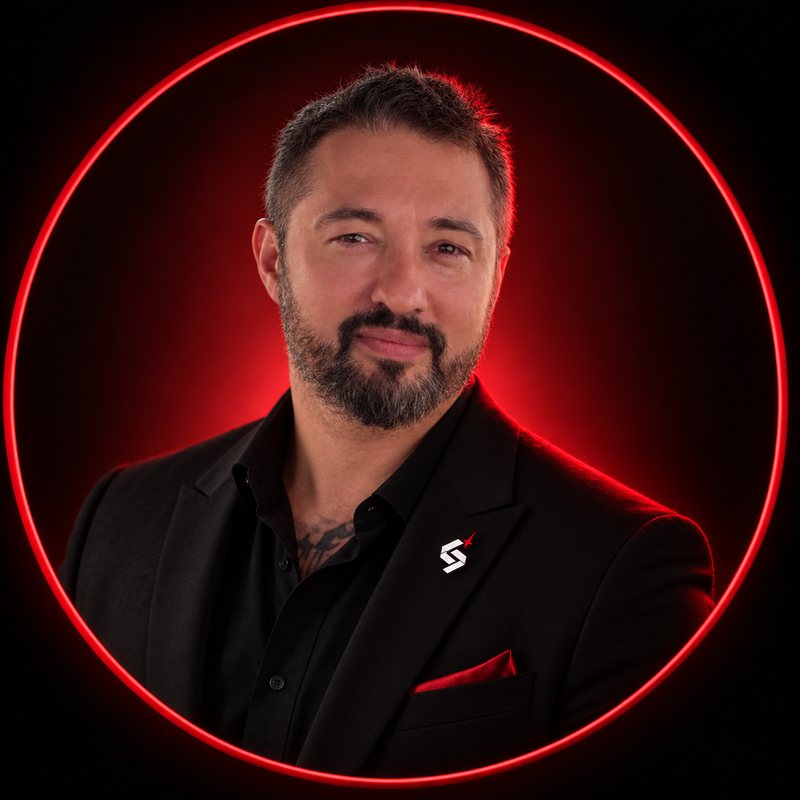
Gabriel Brien
Founder of Crimson Spark Agency. AI filmmaker and creative technologist, writing from running this work daily.
More about Gabriel →