
Duck or Fly is a rap video we made at Crimson Spark as a studio original. The artist, Kiko Sky, is fictional. So are the song, the four worlds and everyone in them, from a punk rowing a bathtub to a duck spinning records. Every frame is generated. Nothing was filmed.
Every shot is born alone
An AI video model makes one shot at a time. It does not know what the previous shot looked like, who stood where, or what the duck was wearing. Ask it twice for the same rapper and you get two cousins. Over a few seconds nobody notices. Over three minutes and four worlds, the drift is the first thing viewers feel, even when they can't name it.
So on this video the spectacle was the easy part. The work was making fifty separate generations read as one story: the same face, the same duck, the same rules, from the first "Yo" to the last whispered "Fly."
Duck or Fly by the numbers
Production, October 2026
4
worlds, one per part of the song
3
recurring characters in every world
3
object cuts between worlds
0
frames of filmed footage
One question, used as a casting rule
The song asks one thing: duck or fly. Keep your head low and stay in line, or take the sky. We turned that question into the rule for every world. In each one, the crowd plays it safe and Kiko doesn't.
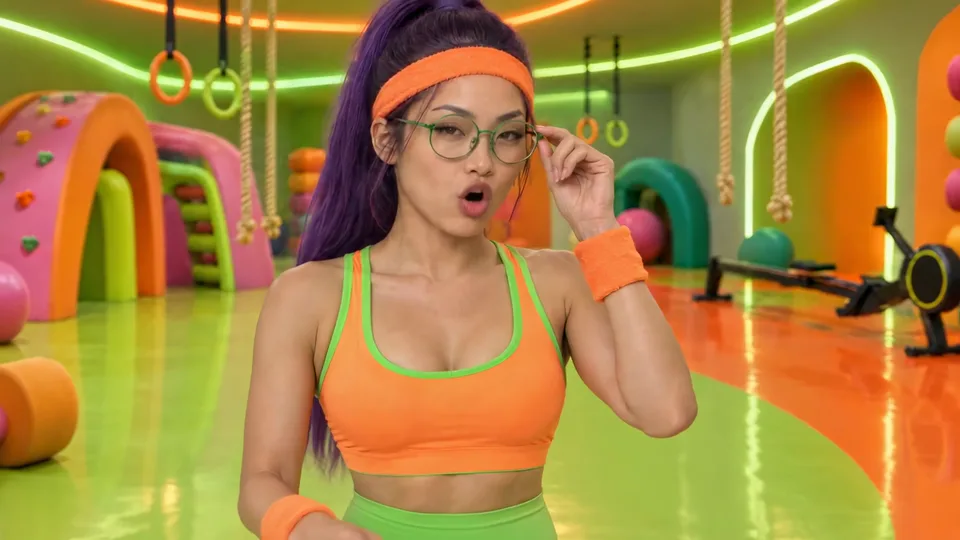
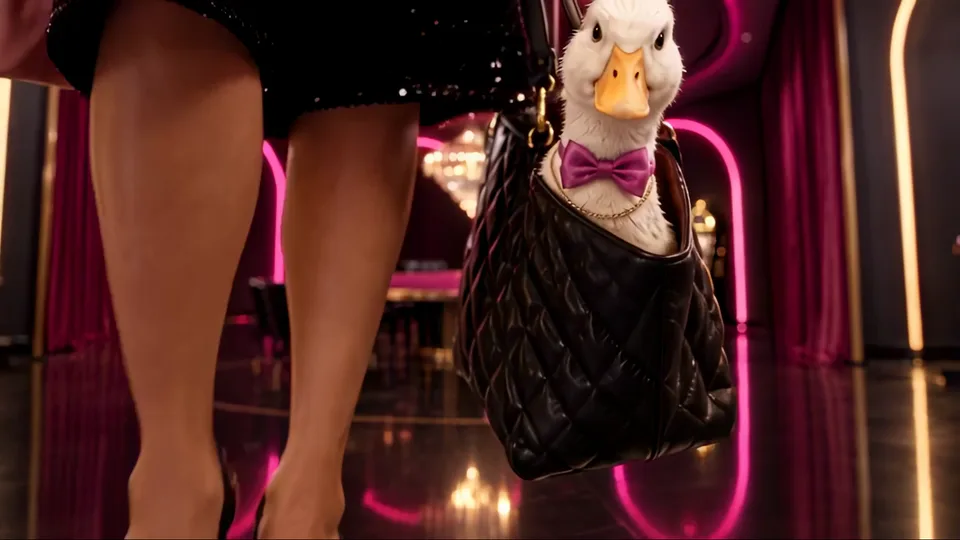
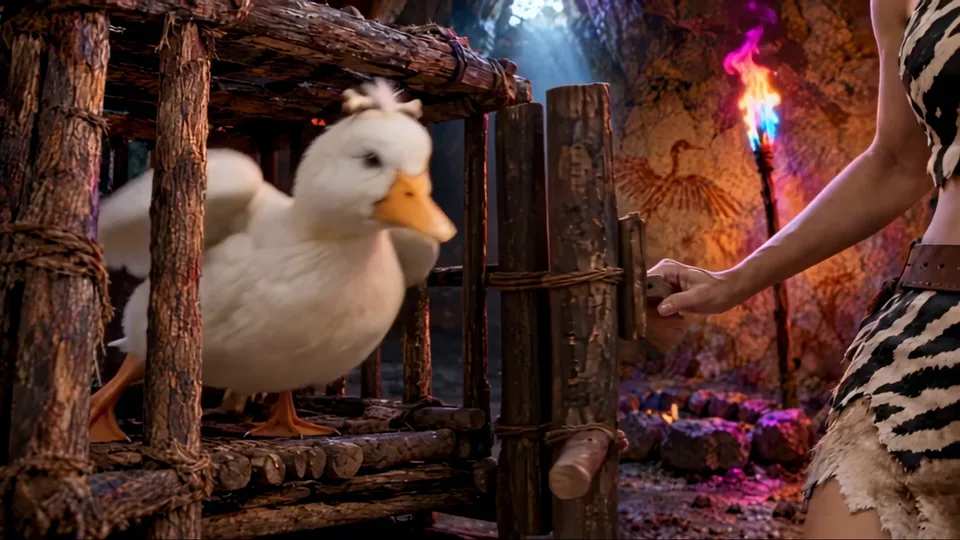
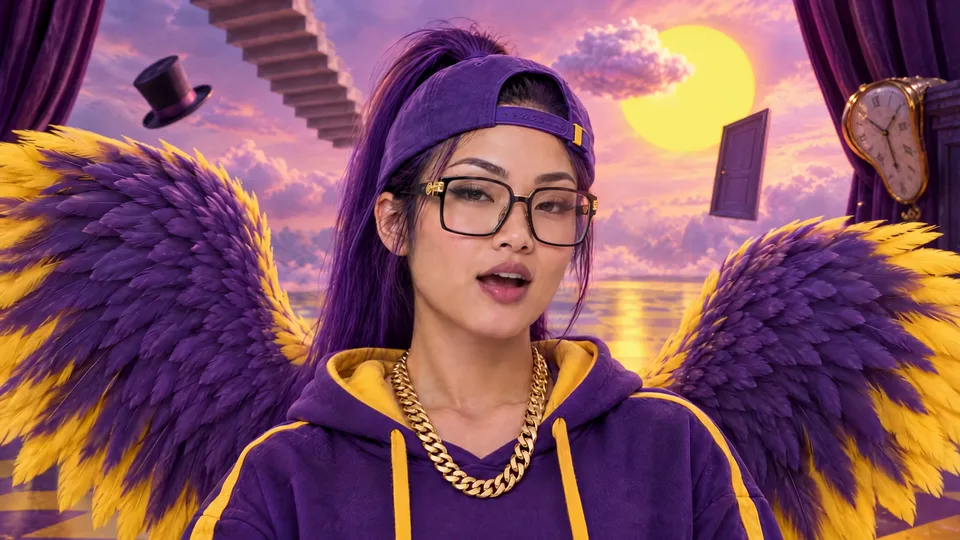
In the 90s fitness club, a punk rows a bathtub as hard as he can and never moves. In the pink-and-black casino, the players have duck heads and fold their cards, and Kiko pushes all in. In the stone-age cave, a caveman wants to cook a duck in a cage, and she flicks the latch. In the impossible world, the stairs hang upside down, the freed duck is now the DJ, and she grows wings.
Three characters that travel
The easiest way to make four worlds feel like four videos is to cast them separately. We did the opposite. Three characters cross every world, each with one new look per world: Kiko, her duck, and the same mohawk punk, who is a rower, a croupier, a caveman and a magician in turn. The duck changes outfit with her: a headband in the gym, a bow tie in the bag, a bone in his feathers, headphones at the turntables.
Every one of those looks, and each empty set, was approved on a reference sheet before the first shot. The sheet is what the model gets every time: the face, the full outfit, the colours, nothing else. That is how the punk in the casino is visibly the punk from the bathtub.
Hand the world over with an object
A hard cut from a gym to a casino breaks the spell. So each change of world rides on a shape. The last frame of one world and the first frame of the next share an object in the same place in the frame.
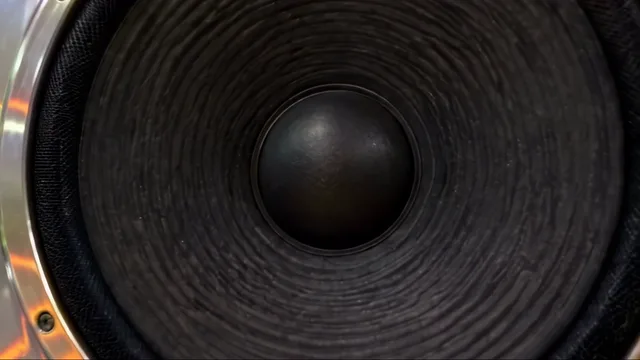

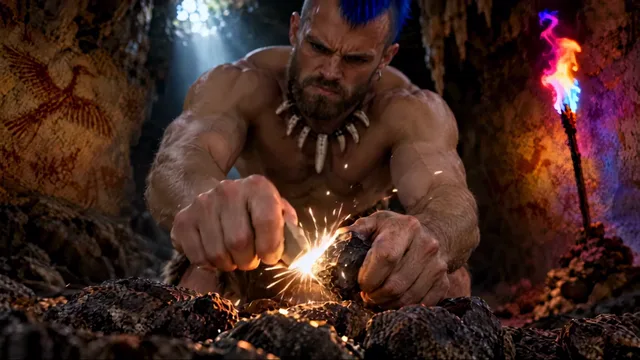
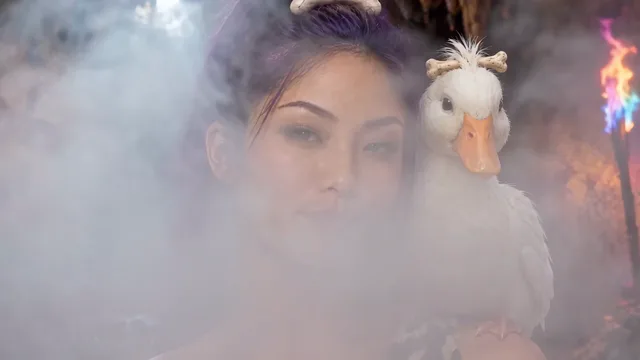
Those cuts have to be planned before generation. The model will not land a speaker cone in the exact centre of the frame by luck, so the brief for that shot says where it ends, and the next shot is briefed to start there.
The lip-sync rule, and when to hide the face
Three sung moments per verse and per chorus: beginning, middle, end. Five seconds maximum, in close-up, the face big from the first frame.
It is the rule we set on Hit Your Mark, and it held again. The second half of the rule matters just as much: when Kiko sings over a story shot, her face stays out of frame. We see her from behind on the poker floor, from far away in the sky, or only her hand on the latch. A generated face that doesn't move its lips while the voice keeps going reads as fake faster than anything else.
Before any of it, the song was mapped from the isolated vocal: every line, measure by measure, down to the tenth of a second. Each sung shot was cut on its first syllable, and nothing moves its lips during an instrumental.
What the model doesn't decide
Every shot went through a physical check before it was generated: who touches what, where a character enters and leaves the frame, the scale of a boombox the size of a house, the colour of each outfit in each world. A flaw caught on paper costs a sentence. A flaw caught after generation costs a shot.
The edit went through three versions, each reviewed shot by shot. The third was approved as is.
Music videos at Crimson Spark
Worlds, looks and lip sync built around your song, reviewed shot by shot. See the music video offer →
What is generated, and what is not
Every image, character, set and voice in Duck or Fly is AI-generated, and so is the song. Kiko Sky is fictional, and no real artist's face or voice is used. The concept, the lyrics, the storyboard, the song map, the edit, the titles and the review were done by the studio.
Gabriel Brien
Founder of Crimson Spark Agency. AI filmmaker and creative technologist, writing from running this work daily.
More about Gabriel →