Hit Your Mark is a pop hip-hop music video we made at Crimson Spark as a studio original. The duo, Kairo & Séla, is fictional. So are the song, the four sets and everyone in them, from a photographer with a two-foot mustache to a tiger in a top hat. Every frame is generated. Nothing was filmed.
Spectacle stopped being the hard part
Two years ago, a generated crocodile in a dinner jacket was the whole show. Today any model makes one in a minute, and viewers have scrolled past hundreds. What they rarely see is a generated singer who sings: a mouth that opens on the beat, closes on the rest, and holds for a whole verse.
That is where most AI music videos break. The mouth moves during the instrumental. A line starts mid-word. The face turns away just as the chorus lands. Viewers may not name it, but they feel it, and the video reads as fake. So we treated the spectacle as the easy part and the lip sync as the craft.
Hit Your Mark by the numbers
Production, October 2026
4
sets, one per part of the song
8
looks, approved on reference sheets
4
versions, the last approved as is
0
frames of filmed footage
A video about the shoot
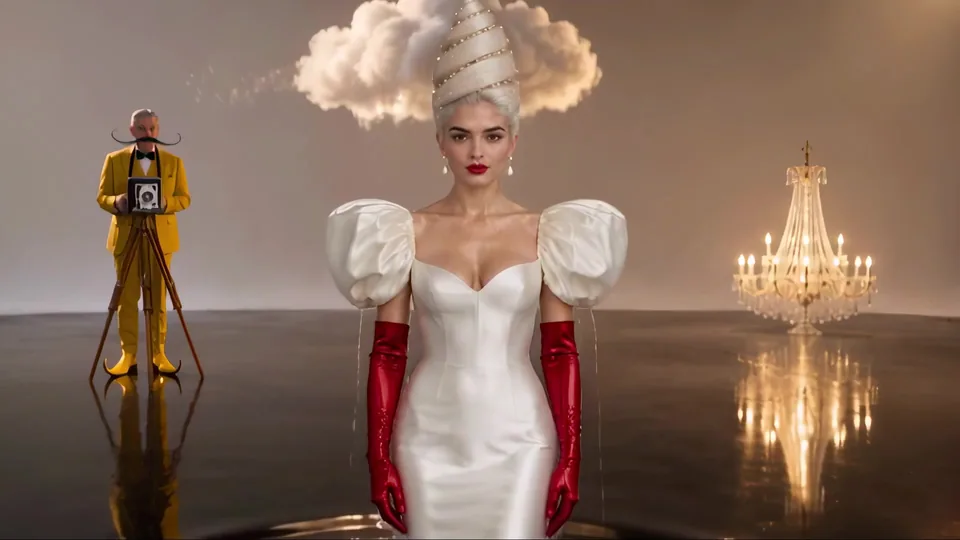
The song is about hitting your mark, the way an actor finds the tape on the floor. So the video is about the shoot itself. It opens inside a photographer's lens and ends on the director in his chair, saying the last word: "Cut." That director is me, as my own digital twin.
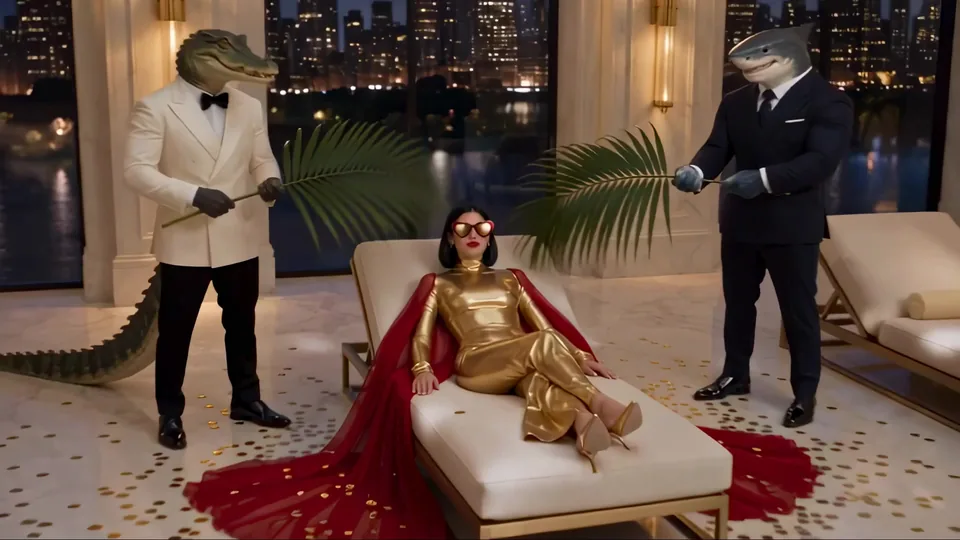
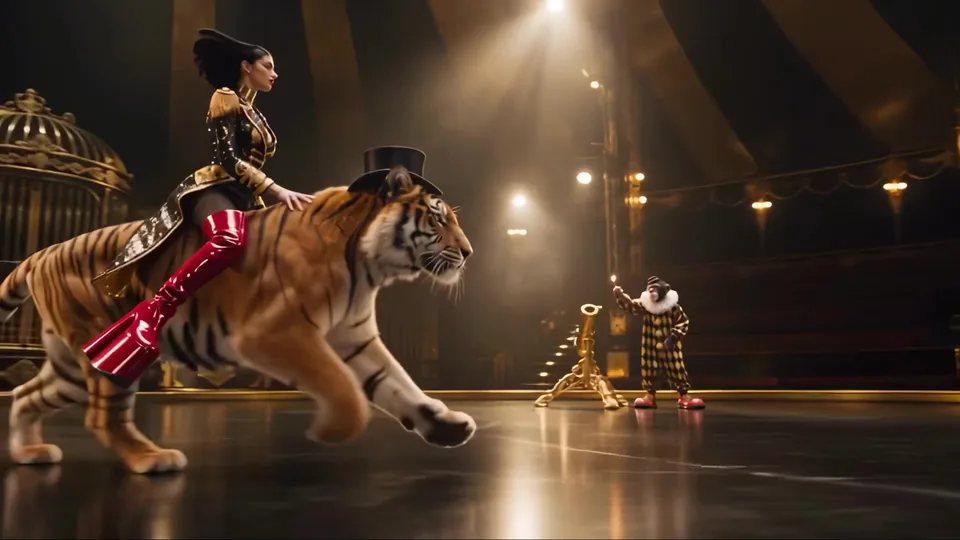
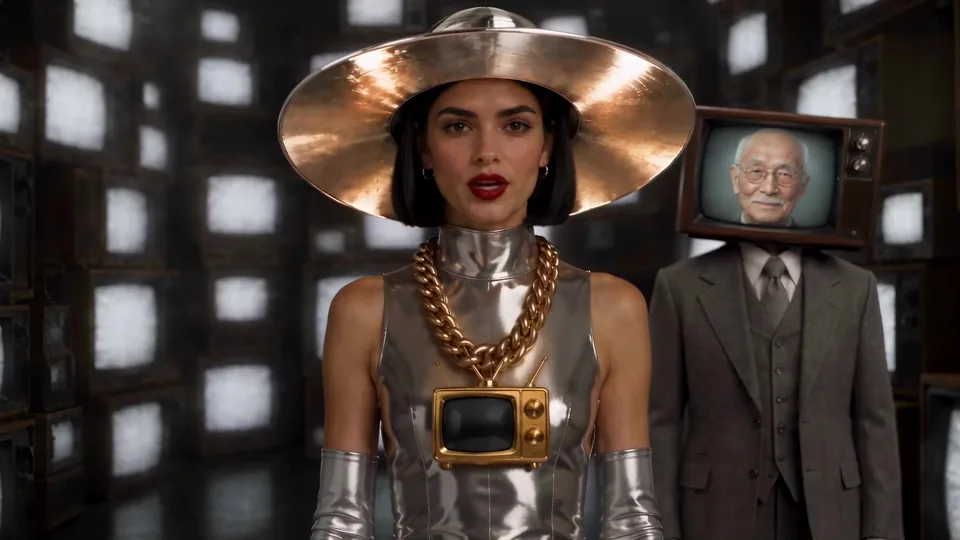
Four sets carry the song, one per part: an upside-down studio for the first verse and chorus, a marble pool at night with a crocodile and a shark as bodyguards, a circus big top, and a room built out of old televisions for the bridge.
Map the song before the first frame
Before generating anything, we mapped the song: every line, who sings it, and exactly when it starts. Lip sync lives or dies on that map. Our first full cut proved it: a verse landed on the intro and the bridge ended up in the wrong set, because we had estimated instead of measured.
From the second cut on, every sung shot was placed by measurement, not by ear. That discipline is most of what separates a singer who sings from a face that moves.
The lip-sync rule
Three sung moments per verse and per chorus: beginning, middle, end. Five seconds maximum, in close-up, the face big from the first frame. Mouth closed until the voice starts.
Short and close is what holds. Sync drifts with length, and it drifts more when the face is small or turned. Filmed music videos don't show the singer singing every second either. They cut away to the story and come back on the line that matters.
Between those moments, the story runs. The crocodile and the shark fight over an olive, and Séla catches it. Kairo rides in on an elephant. A monkey fires the confetti cannon. That is where the camera goes wild: a rig strapped to a performer, a trapeze, a crane rising from the floor, a speed ramp on the TV-head man. The wild moves stay off the lips.
Sheets before shots
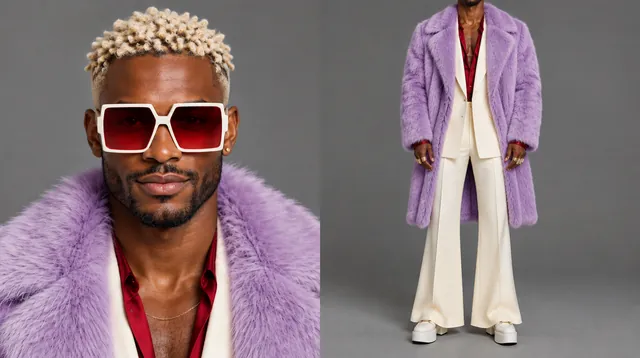
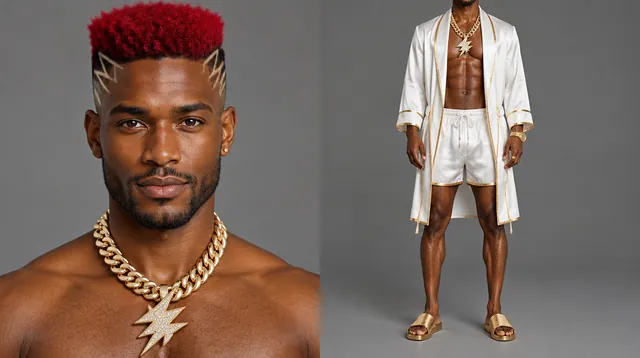
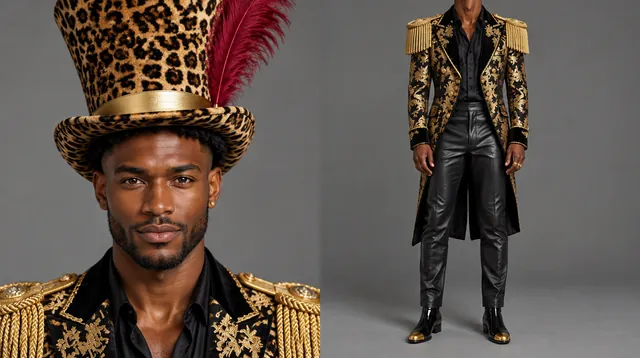
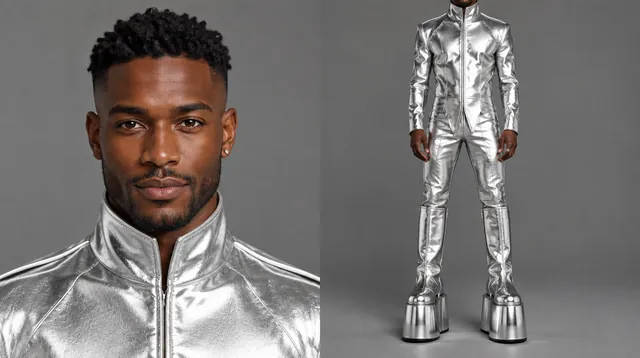
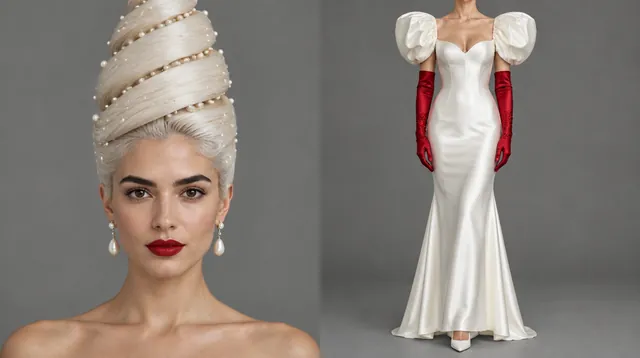
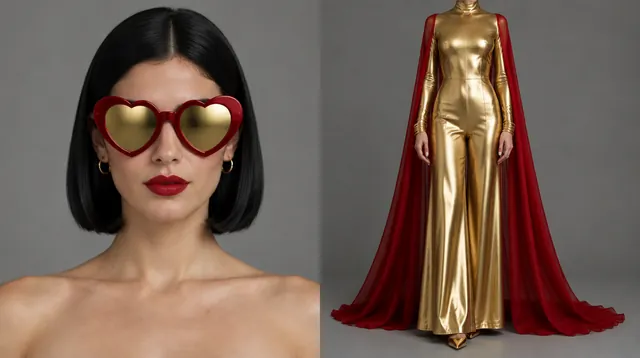
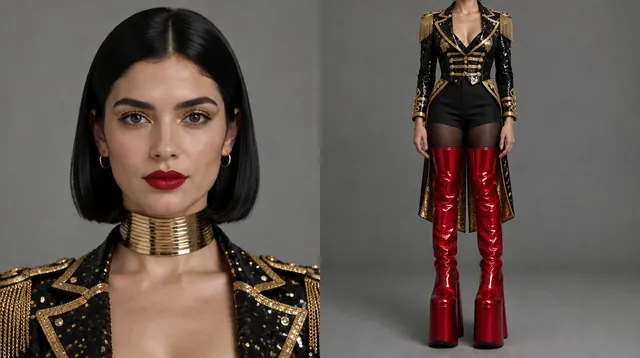
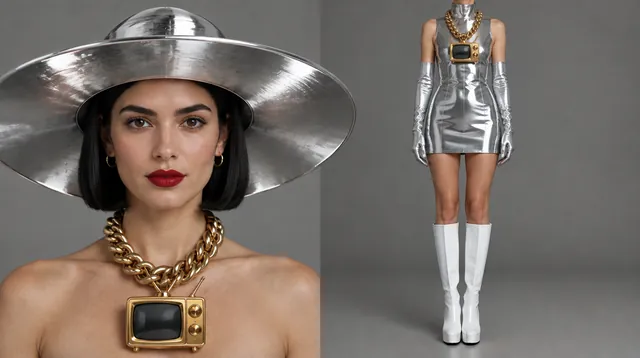
Kairo and Séla change look at every set, four each. Every look, plus the photographer, the TV-head man and the cameo, was approved on a reference sheet before the first shot: the face on one side, the full outfit on the other, on a plain grey background. That is what keeps a face the same from the pool to the circus.
Review shot by shot
The video went through four versions. Each version had its own page: every shot, its timecode and a comment box. I wrote notes, and the next version answered them one by one. Version four was approved as is.
Then the finish: a sharpness pass on the clean edit, then the colour grade, 35mm grain, a REC viewfinder on the intro, titles, sound effects, and my own voice for the final word.
What this changes for artists and labels
A video with four built sets, trained animals and a crane would need a crew, a stage and a budget most independent artists never see. Here the budget follows the runtime. We price music videos like our films, at $14 USD per second of final video, so a video the length of Hit Your Mark comes to $1,960 USD.
The artist brings the track, the vocal stem and, to appear in the video, a short recording and written consent for a digital twin. What changes is where the work goes: less into logistics, more into timing and direction.
Music videos at Crimson Spark
Sets, looks and lip sync built around your song, reviewed shot by shot. See the music video offer →
What is generated, and what is not
Every image, character, set and voice in Hit Your Mark is AI-generated, and so is the song. Kairo & Séla are fictional, and no real artist's face or voice is used. The director's cameo is my own digital twin. The concept, the song map, the edit, the grade, the titles and the sound design were done by hand.
Gabriel Brien
Founder of Crimson Spark Agency. AI filmmaker and creative technologist, writing from running this work daily.
More about Gabriel →